- Ziva@CKlasersz.com
- WeChat:86-13138536413
- 400-168-9906
- 0755 27084852
- 3201809842@qq.com
- WeChat:86-19879133659
- 3376937209@qq.com
- WeChat:86-189 8489 0902


A. Polymer & Rubber Residue
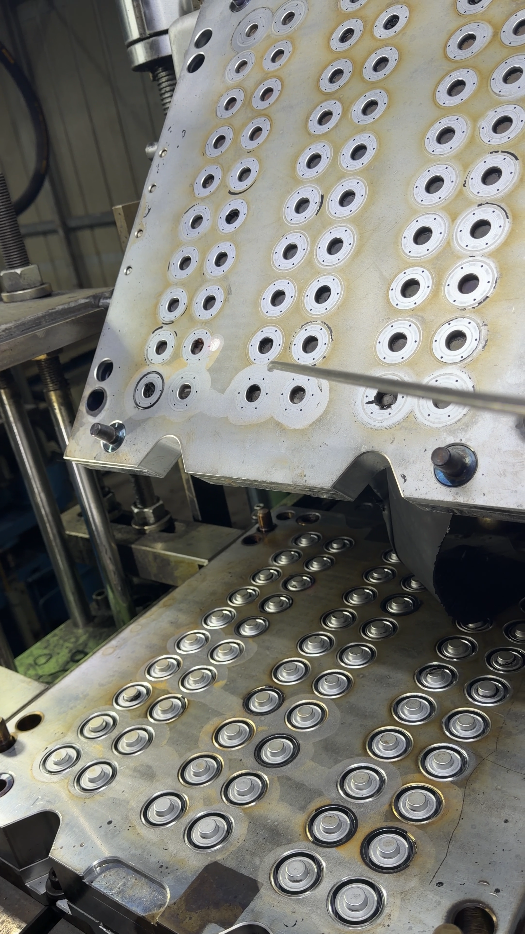
Residues Caused by Demolding Difficulties: Automotive plastic and rubber materials have strong adhesion properties. Even with release agents applied, residual materials are easy to tear off and stay on delicate mold structures such as engraved logos, textures and parting edges. Curing & Vulcanization Residue: During high-temperature molding and vulcanization, materials crosslink and solidify, tightly adhering to the mold cavity and forming a stubborn film that is hard to remove.
B. Release Agent Accumulation
To reduce sticking during mass production, a large amount of release agent (silicone oil, solvent-based type) is widely used. Repeated spraying and continuous heating will form a thick, sticky carbonized layer on the mold surface. This contaminant seriously affects the surface finish of automotive parts and leads to unstable demolding.
C. Oil Stain & Oxide Layer
In automotive mold production, hydraulic oil, lubricating oil and thin oxide layers are commonly generated. Oil mixes with carbonized release agent, forming composite dirt that blocks mold vents, tiny grooves and fine texture features.
Application Advantage:
- Complete Removal of Microscopic Residues: The parting line and carving details of automotive molds determine the appearance and assembly accuracy of finished parts. Traditional cleaning methods struggle to fully eliminate trace polymer residue, oil dirt and carbon deposits hidden in narrow gaps. Laser cleaning precisely vaporizes these stubborn contaminants, restores sharp parting lines and clear carving details, and effectively improves the appearance quality of automotive parts.
- Non-Destructive Cleaning, Protecting Mold Precision: Dimensional tolerance and surface coating of automotive molds are highly strict. Sandblasting and mechanical polishing will wear mold steel and damage plating, textures and engraved marks. Laser cleaning adopts the “selective removal” principle, only removing surface contaminants (rubber, plastic, oil, carbides and oxides) without hurting the mold substrate. The original mold dimensions and delicate textures are well retained, greatly extending mold service life.