- Ziva@CKlasersz.com
- WeChat:86-13138536413
- 400-168-9906
- 0755 27084852






Iron oxide, commonly recognized as rust, is the absolute nemesis of metallurgical integrity. Whether you are managing heavy industrial machinery, preserving automotive restorations, or maintaining delicate high-precision injection molds, the degradation caused by uncontrolled oxidation is relentless. The failure to address corrosion leads to catastrophic mechanical breakdowns, decreased operational efficiency, and massive financial losses. If your goal is to remove rust permanently, you must go beyond superficial, temporary treatments and address the oxidation at a molecular level.
From our experience at Super Fast Laser, a staggering number of manufacturing facilities and industrial maintenance teams waste millions of dollars annually on outdated, inefficient fixes that merely mask the underlying corrosion. To truly remove rust permanently, the chosen methodology must completely strip the iron oxide from the substrate without altering the structural integrity of the base metal. Furthermore, the surface must be immediately prepared for a protective coating to prevent flash oxidation from atmospheric moisture.
In this authoritative, professional guide, we will explore the six most effective industrial and commercial methods to remove rust permanently. By evaluating their efficiency, operational safety, environmental impact, and long-term viability, we aim to provide you with the expert knowledge required to safeguard your metallic assets.
Table of Contents
Summary Table: Rust Removal Methods
Before diving into the detailed methodologies, review this summary table to quickly compare the various approaches used to remove rust permanently across different industrial applications.
| Methodology | Primary Mechanism | Industrial Suitability | Substrate Damage Risk |
|---|---|---|---|
| Mechanical Abrasion | Physical friction via wheels/discs | Low to Medium | High (Removes base metal) |
| Rust Converters | Chemical reaction (Tannic Acid) | Medium (Structural beams) | None (Converts, does not strip) |
| Acid-Based Solvents | Chemical dissolution | Medium (Small batch parts) | Moderate (Risk of hydrogen embrittlement) |
| Electrolytic Reduction | Electrochemical current | Low (Time-consuming) | None (Preserves base metal) |
| Abrasive Blasting | High-velocity particulate impact | High (Shipyards, heavy machinery) | High (Alters surface profile) |
| Laser Ablation | Photon-induced vaporization | Extremely High (Precision molds) | None (Zero substrate degradation) |
1. Mechanical Abrasion and Grinding
The most traditional and widely recognized approach to surface preparation is mechanical abrasion. This category encompasses the use of wire wheels, flap discs, orbital sanders, and pneumatic angle grinders. By applying sheer physical friction, the operator grinds away the top layer of oxidized metal.
Operational Considerations
While this technique appears to remove rust permanently, it is often deceptive. Mechanical grinding frequently smears the iron oxide deep into the microscopic pores of the metal rather than extracting it. Furthermore, aggressive grinding inevitably removes healthy base material, altering the dimensional tolerances of the component. We recommend this method only for heavy structural steel where dimensional accuracy is not critical. If you are attempting to remove rust permanently from precision tooling or injection molds, mechanical abrasion will ruin the exact specifications of the part.
2. Chemical Rust Converters
When physical access to the corroded area is limited, or when the structural integrity cannot withstand abrasive blasting, chemical rust converters offer a unique alternative. These commercial solutions typically utilize a base of tannic acid combined with a polymer sealant. Instead of stripping the rust away, the chemical reacts with the iron oxide, converting it into a stable, black compound known as iron tannate.
Operational Considerations
Strictly speaking, a converter does not physically remove rust permanently; rather, it neutralizes it and turns the corrosion into a protective, paintable primer layer. From our experience, rust converters are excellent for large infrastructure projects, such as bridge maintenance or marine bulkheads, where complete rust eradication is financially or logistically impossible. However, the treated surface requires an immediate topcoat of epoxy or polyurethane to prevent moisture from re-initiating the oxidation process beneath the converted layer.
3. Acid-Based Chemical Solvents
Industrial acid baths utilize aggressive chemical formulations, most commonly phosphoric acid or hydrochloric (muriatic) acid, to dissolve iron oxide. When severely rusted components are submerged in an acid bath, the chemical rapidly eats away the oxidation, leaving behind bare, raw steel.
Operational Considerations
While an acid bath will definitively remove rust permanently, it introduces a host of secondary complications. First, the disposal of hazardous, heavy-metal-laden acidic waste is a severe compliance issue for modern manufacturing facilities, leading to steep environmental disposal costs. Second, prolonged exposure to strong acids can lead to hydrogen embrittlement in high-carbon steels, causing microscopic cracking and catastrophic structural failure under load. We recommend acid immersion only for non-load-bearing, small-batch components where strict neutralization protocols can be enforced immediately after extraction to prevent rapid flash rusting.
4. Electrolytic Reduction
Electrolysis is a highly scientific, non-destructive method favored by restorers and conservationists. This process involves submerging the rusted component in an electrolytic solution (typically water mixed with sodium carbonate) alongside a sacrificial iron anode. By passing a direct electrical current from a power supply through the solution, an electrochemical reaction occurs. The current forces the oxygen molecules to detach from the iron oxide and migrate toward the sacrificial anode.
Operational Considerations
This method is incredibly gentle. It will remove rust permanently without stripping a single micron of the healthy base metal, making it perfect for restoring invaluable antique machinery or delicate threaded components. Unfortunately, electrolysis is exceptionally slow, often taking several days to process a single batch. Due to the spatial constraints of the immersion tanks and the low processing speed, we do not recommend electrolytic reduction for high-throughput industrial manufacturing or large-scale facility maintenance.
5. Abrasive Media Blasting
Abrasive media blasting, commonly known as sandblasting, relies on compressed air to propel abrasive particulate at high velocities against the corroded surface. Depending on the substrate, operators might use crushed glass, aluminum oxide, walnut shells, or dry ice. The kinetic energy of the impact shatters the iron oxide, leaving behind a heavily profiled surface.
Operational Considerations
If you need to remove rust permanently from massive surface areas, such as shipbuilding hulls or heavy agricultural equipment, abrasive blasting is highly effective. The resulting surface profile provides an excellent mechanical “tooth” for heavy-duty industrial coatings to adhere to. However, the drawbacks are significant. Abrasive blasting generates massive amounts of airborne particulate, requiring extensive respiratory safety equipment and environmentally controlled containment booths. Furthermore, the aggressive nature of the media can easily warp thin sheet metal and destroy the polished surfaces of precision molds.
6. Laser Ablation Technology
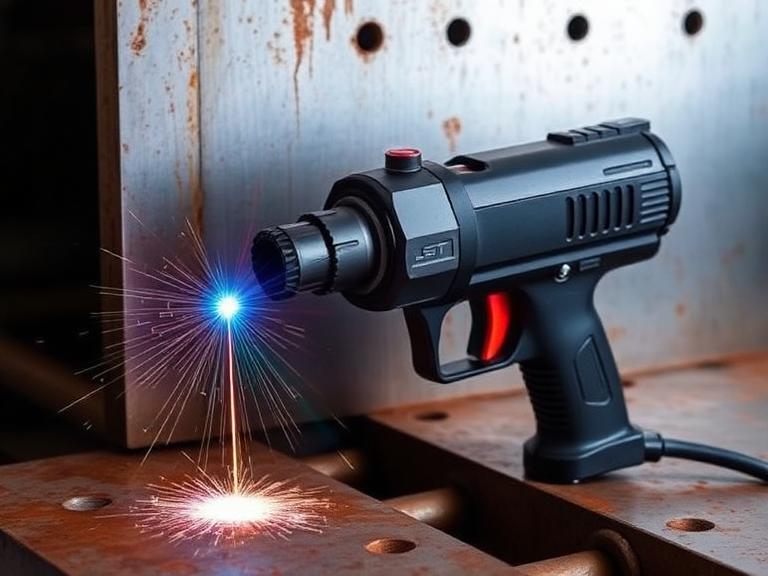
The absolute pinnacle of modern surface preparation is laser cleaning technology. Utilizing high-intensity, short-pulsed laser beams, this method leverages the principle of photon-induced ablation. When the laser energy hits the rusted surface, the dark iron oxide absorbs the photons, superheats instantly, and vaporizes into a localized plasma cloud. Because the underlying healthy metal reflects the specific wavelength of the laser, the beam ceases to have any effect once the rust is gone.
Operational Considerations
From our experience, laser ablation is the only way to remove rust permanently with absolute precision, zero secondary waste, and zero substrate degradation. It is a dry, non-contact, and non-abrasive process. We highly recommend laser cleaning for aerospace components, automotive manufacturing lines, and specifically for the maintenance of high-value injection molds where preserving microscopic dimensional tolerances is critical.
The Super Fast Laser Industrial Solution
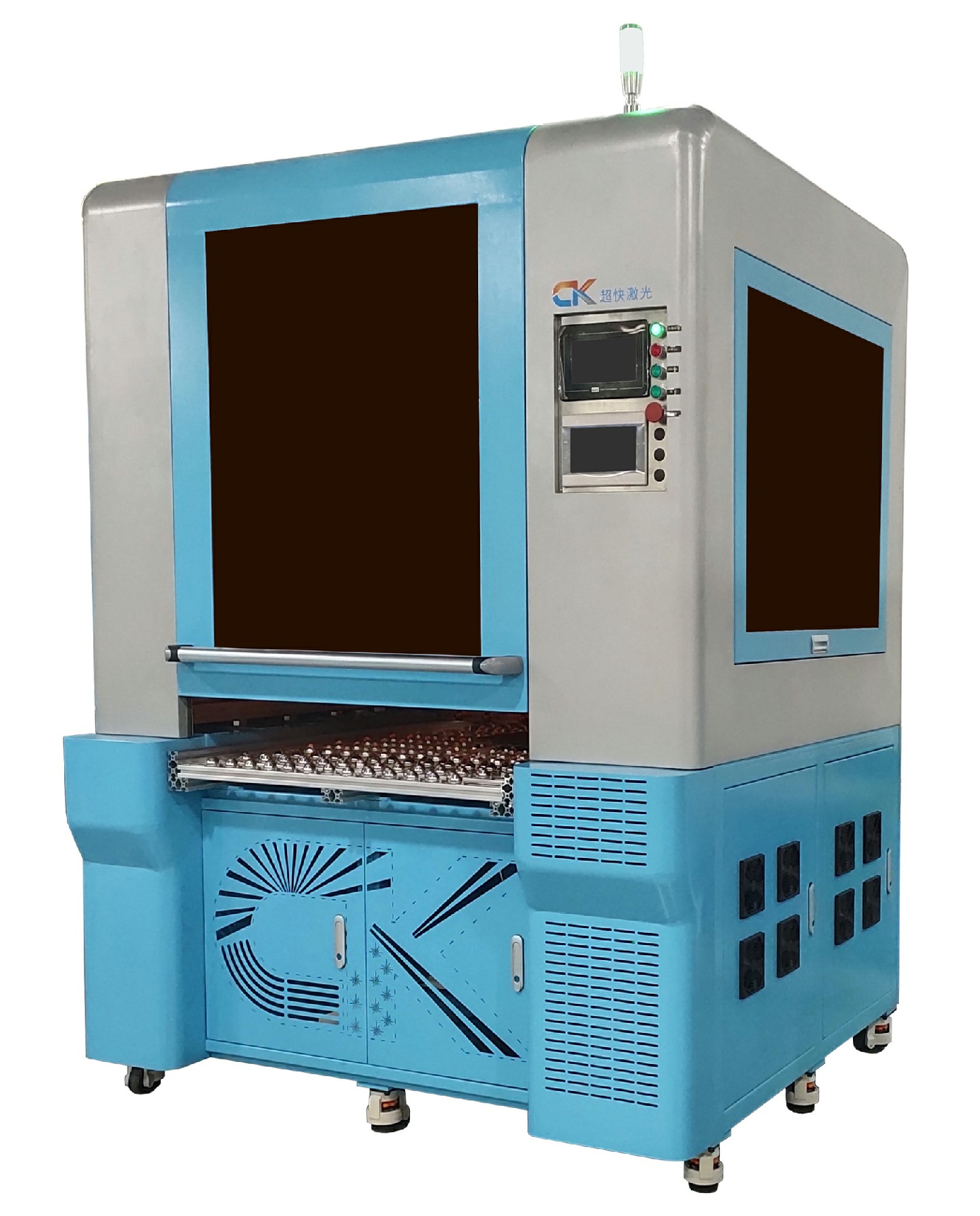
At Super Fast Laser, we have engineered the ultimate solution to remove rust permanently in high-demand industrial environments. Our flagship system, the Super Fast Laser 6 Axis automatic Mold Laser Cleaning Machine, represents a massive leap forward in automated maintenance technology. Designed specifically for complex geometries and heavy industrial molds, this robotic system eliminates human error, ensures uniform cleaning passes, and drastically reduces equipment downtime.
By integrating a highly articulate 6-axis robotic arm with our state-of-the-art 1064nm wavelength laser source, the system can reach deep into intricate mold cavities that are impossible to clean via manual abrasion or blasting. The machine operates without consumables, requires no harsh chemicals, and leaves no hazardous residue.
Technical Specifications
| Items | Parameters |
|---|---|
| Cleaning Power | 120W |
| Total Power | 5KW |
| Power Voltage | AC 110/220V |
| Cooling Method | Air Cooling |
| Laser Class | Level 4 |
| Pulse Energy | 1.5mJ |
| Laser Wavelength | 1064nm |
| Preheat Time | 10s |
| Working Condition | Flat place without vibration and impact |
| Working Temperature | 0-40 Celsius |
| Storage Temperature | -10 to +60 Celsius |
| Machine Size | Standard Model: W160 x L160 x H220 cmPlus Model: W200 x L200 x 245 cm |
| Weight | 900kg |
If your manufacturing facility is seeking to optimize its maintenance protocols, lower its environmental footprint, and remove rust permanently without risking damage to multimillion-dollar tooling, the Super Fast Laser 6 Axis automatic Mold Laser Cleaning Machine is the definitive investment.
Frequently Asked Questions (FAQs)
Can you ever truly remove rust permanently?
Yes. To remove rust permanently, you must completely eradicate the existing iron oxide using a highly effective method like laser ablation or abrasive blasting. However, permanent removal must be immediately followed by the application of an impermeable barrier coating (such as epoxy, powder coating, or specialized oils) to seal the raw metal away from atmospheric oxygen and moisture.
“`
Why do we recommend laser cleaning over traditional sandblasting?
From our experience, laser cleaning is vastly superior for precision components because it is entirely non-abrasive. Sandblasting profiles and damages the base metal, altering dimensional tolerances. Furthermore, our Super Fast Laser systems generate zero secondary waste (no sand or glass beads to clean up), making the process far safer for operators and significantly more environmentally friendly.
How does the 1064nm wavelength target rust specifically?
The 1064nm wavelength is highly absorbed by dark, oxidized layers (rust, soot, grease) but highly reflected by clean, unoxidized metals. This physical property allows the laser to aggressively vaporize the corrosion and then stop harmlessly at the boundary of the healthy substrate, ensuring no thermal damage occurs to the underlying steel or aluminum.
Is the Super Fast Laser 6 Axis machine difficult to operate?
While it utilizes advanced Level 4 laser technology, the 6-axis automation drastically simplifies the operational workflow. Once the cleaning paths are programmed for a specific mold or part, the machine executes the routine flawlessly. This automation eliminates the fatigue and inconsistency associated with manual rust removal processes.
Industry References
1. The Society for Protective Coatings (SSPC). (2025). Surface Preparation Standards for Industrial Steel Structures.
2. Journal of Laser Applications. (2025). Thermal Dynamics and Substrate Preservation in 1064nm Nanosecond Laser Cleaning.