- Ziva@CKlasersz.com
- WeChat:86-13138536413
- 400-168-9906
- 0755 27084852






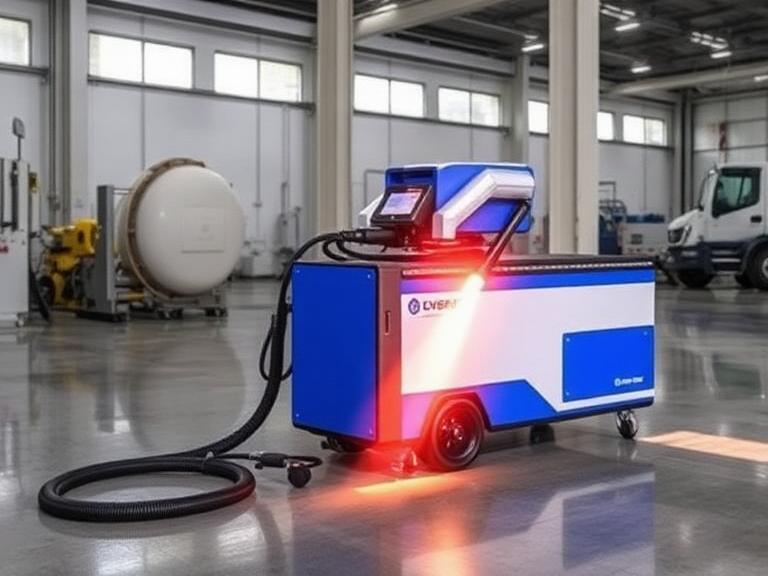
Surface preparation and industrial cleaning have undergone a technological revolution. Traditional methods such as abrasive sandblasting, dry ice blasting, and hazardous chemical stripping are rapidly being replaced by highly focused, eco-friendly optical energy. At Super Fast Laser Technology Co.,Ltd., headquartered in Shenzhen, we are proud to be the first domestic manufacturer focusing exclusively on the research and development, production, and sales of laser cleaning machines. Operating our own dedicated R&D team and production factory, we maintain a leading position in the laser cleaning field.
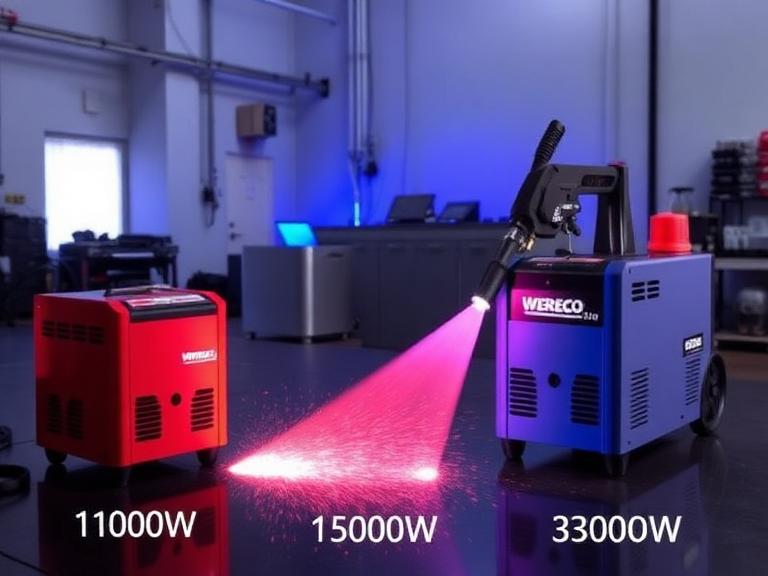
Facility managers, manufacturing engineers, and restoration specialists frequently approach us with a critical procurement question: what cleaning jobs can 100W, 1500W, or 3000W laser cleaners handle? Selecting the correct wattage is not a simple matter of faster being better. The physics of laser ablation require operators to match the energy output directly to the thermal tolerance of the substrate and the physical properties of the contaminant. In this authoritative guide, we break down the operational capacities of varying power levels to ensure your capital investment yields optimal performance.
Table of Contents
- 1. Understanding the Technology: Pulsed vs. Continuous Wave Lasers
- 2. Precision and Preservation: What a 100W Laser Cleaner Can Handle
- 3. The Industrial Workhorse: What a 1500W Laser Cleaner Can Handle
- 4. Heavy-Duty Stripping: What a 3000W Laser Cleaner Can Handle
- 5. Summary Table: Matching Laser Power to the Application
- 6. From Our Experience: How to Avoid Substrate Damage
- 7. Frequently Asked Questions (FAQs)
- 8. Industry References
1. Understanding the Technology: Pulsed vs. Continuous Wave Lasers
Before evaluating the specific cleaning jobs can 100W, 1500W, or 3000W laser cleaners handle, operators must grasp the fundamental difference in how laser light is delivered to a surface. Laser cleaning machines are generally divided into two distinct categories: Pulsed Lasers and Continuous Wave (CW) Lasers.
Low-power systems, such as the 100W models, almost exclusively utilize pulsed laser technology. A pulsed laser emits high-energy bursts of light lasting only nanoseconds. Because the beam is not continuously active, the underlying metal or composite has time to dissipate heat between pulses. This results in an incredibly precise ablation process where the contaminant is instantly vaporized (sublimated) while the substrate remains entirely cool and undamaged.
Conversely, mid-to-high power systems ranging from 1500W to 3000W utilize Continuous Wave (CW) technology. A CW laser emits an uninterrupted, steady stream of optical energy. While this allows for extremely fast cleaning speeds over vast surface areas, it introduces significant heat into the base material. Therefore, identifying what cleaning jobs can 100W, 1500W, or 3000W laser cleaners handle depends entirely on whether the workpiece can survive the thermal impact of a continuous beam.
2. Precision and Preservation: What a 100W Laser Cleaner Can Handle
A 100W pulsed laser cleaner is a high-precision tool designed for delicate substrates where dimensional accuracy is strictly mandated. Operating with near-zero heat input, it effectively strips thin contaminants without altering the metallurgical structure of the underlying material.
- Injection Mold Maintenance: Plastic and rubber manufacturing molds accumulate release agents and residue over thousands of cycles. A 100W laser cleans intricate mold geometries while the tooling remains hot on the press, without degrading the microscopic tolerances or etching the steel.
- Historical and Cultural Restoration: Museum conservators utilize 50W to 100W lasers to safely remove soot, aged varnishes, and atmospheric patina from stone facades, bronze statues, and ancient timber without inflicting physical abrasion.
- Aerospace Component Cleaning: Cleaning carbon fiber composites, thin-gauge aluminum, or stripping specific ceramic coatings from engine components requires strict thermal management, making the 100W pulsed system mandatory.
- High-Value Part Remediation: Semiconductor manufacturing equipment and delicate printed circuit boards (PCBs) require non-destructive cleaning to remove conformal coatings or oxidation.
Due to the sophisticated internal optics required to generate rapid nanosecond pulses, these machines carry a specific pricing structure. For engineers calculating the capital expenditure for precision units, we recommend reviewing our comprehensive portable laser rust removal machine price analysis to understand the cost-to-benefit ratio of pulsed technology.
3. The Industrial Workhorse: What a 1500W Laser Cleaner Can Handle
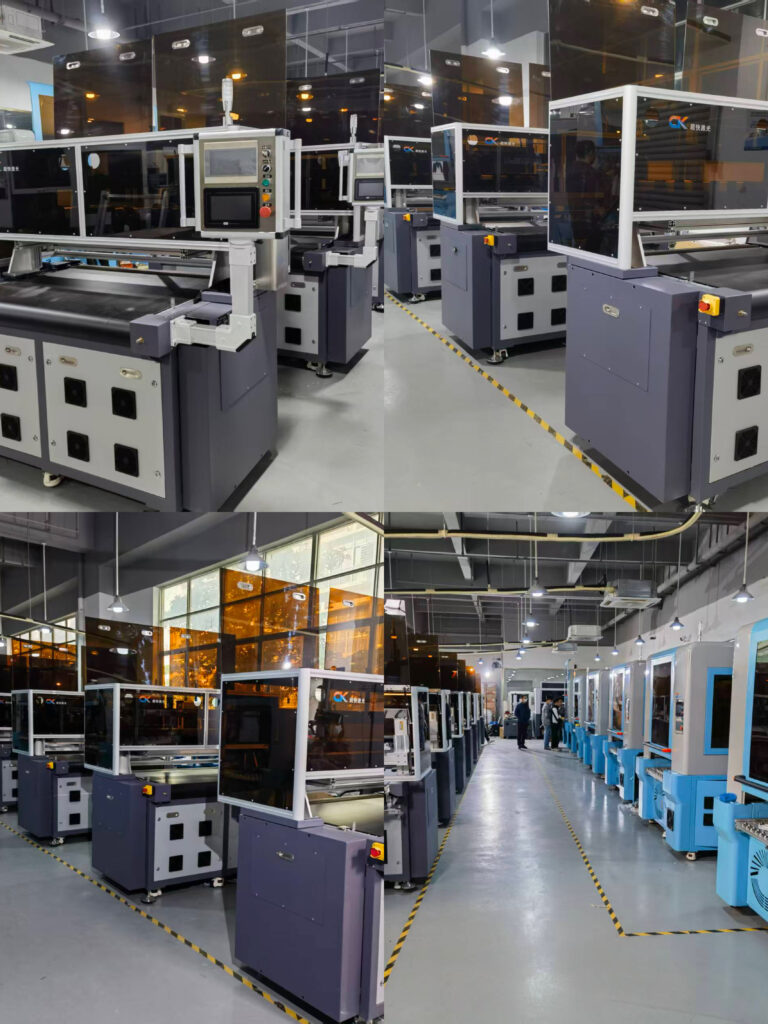
When procurement teams ask what cleaning jobs can 100W, 1500W, or 3000W laser cleaners handle, we consistently point to the 1500W Continuous Wave system as the ultimate industrial sweet spot. Striking a perfect balance between rapid processing speed and manageable heat input, the 1500W laser covers roughly 80 percent of standard heavy-industry requirements. These units routinely clean 10 to 25 square meters per hour, depending on the severity of the oxidation.
- Pre-Weld Surface Preparation: Removing mill scale, oil, and cutting fluids from carbon steel prior to welding. Eliminating these surface contaminants prevents weld porosity and guarantees structural joint integrity.
- Post-Weld Slag and Heat Tint Removal: Rapidly cleaning stainless steel and aluminum welds to remove discoloration and spatter without the use of toxic pickling pastes or abrasive wire wheels.
- Automotive and Heavy Machinery Overhaul: Stripping multi-layer industrial paint, powder coating, and heavy rust from vehicle chassis, forklift frames, and agricultural equipment. For a detailed breakdown of automotive and structural applications, explore our guide on laser cleaning for rust and paint removal.
- Graffiti and Infrastructure Cleaning: Removing deep-set spray paint from municipal concrete, masonry, and steel bridge supports efficiently and cleanly.
The 1500W system provides immense mobility for fabrication shops and field maintenance teams. If you are outfitting a new facility and demand high throughput, comparing the top models in the industrial laser cleaning machine 2026 market will ensure you select a unit capable of sustaining continuous shift work.
4. Heavy-Duty Stripping: What a 3000W Laser Cleaner Can Handle
The 3000W CW laser is an uncompromising powerhouse engineered for extreme, large-scale mass cleaning. To answer what cleaning jobs can 100W, 1500W, or 3000W laser cleaners handle at the highest end of the spectrum, you must look to heavy infrastructure. Capable of clearing 15 to 40 square meters per hour, this equipment requires a dedicated 380V power supply and industrial-grade water chilling to manage the immense energy output.
- Marine and Shipyard Descaling: Removing thick layers of salt-crystallized rust, barnacle calcification, and multi-layer marine epoxy from ship hulls and offshore drilling platforms.
- Pipeline and Storage Tank Maintenance: Mass descaling of heavy-wall petroleum pipelines and chemical storage tanks where covering vast square footage rapidly is the primary operational goal.
- Thick Mill Scale and Forging Prep: Processing massive steel billets and heavy forgings immediately out of the foundry, instantly vaporizing thick layers of scale.
It is vital to note that a 3000W laser induces substantial heat into the workpiece. It must only be applied to thick, robust substrates (generally 5mm thick or greater) that possess the thermal mass required to act as a heat sink. Applying a 3000W beam to thin-gauge sheet metal will result in immediate thermal distortion. For companies weighing the investment between mid-tier and ultra-high power, reviewing the 1000W laser cleaning machine price USA benchmarks against 3000W systems will clarify how scaling wattage affects your laser cleaner cost guide 2026 projections.
5. Summary Table: Matching Laser Power to the Application
| Laser Power Output | Laser Technology Type | Average Cleaning Speed | Substrate Suitability | Primary Industrial Applications |
|---|---|---|---|---|
| 100W to 300W | Pulsed Laser (Nanosecond) | 0.1 to 2.0 m²/hour | Highly sensitive, thin metals, plastics, heritage stone | Mold cleaning, artifact restoration, semiconductor prep, precision part stripping |
| 1000W to 1500W | Continuous Wave (CW) | 10 to 25 m²/hour | Standard structural steel, thick aluminum, engine blocks | Pre-weld prep, powder coat stripping, auto chassis rust removal, structural steel |
| 2000W to 3000W | Continuous Wave (CW) | 15 to 40+ m²/hour | Thick, heavy steel infrastructure (>5mm), robust castings | Shipyard hull descaling, mass pipeline cleaning, heavy mill scale, storage tanks |
6. From Our Experience: How to Avoid Substrate Damage
From our experience engineering laser systems at Super Fast Laser Technology Co.,Ltd., the most detrimental mistake procurement managers make is assuming that higher wattage automatically equates to better cleaning. Evaluating the cleaning jobs can 100W, 1500W, or 3000W laser cleaners handle reveals a strict technological boundary based on heat.
We recommend that clients approach machine selection by analyzing the substrate first, not the contaminant. If your core business involves cleaning thin sheet metal car panels, purchasing a 3000W machine will destroy your inventory via heat warping. Conversely, attempting to strip a 50-foot commercial ship hull with a 100W pulsed laser will take months and heavily inflate your labor costs. Always align the laser delivery method (Pulsed vs. CW) with the thermal tolerance of the material you intend to clean.
7. Frequently Asked Questions (FAQs)
Will a 1500W Continuous Wave laser melt or damage standard steel?
No, provided the operator moves the laser focal head at an appropriate speed. Carbon steel has a melting point significantly higher than the vaporization point of rust and paint. However, if the operator holds a 1500W CW beam stationary on a thin piece of steel for several seconds, it will cause thermal discoloration and potential warping.
Why are 100W pulsed laser cleaners sometimes more expensive than 1500W continuous wave machines?
The cost of a laser machine is dictated by the complexity of its internal fiber optics, not just raw electrical output. Generating thousands of perfectly timed, highly controlled nanosecond pulses requires advanced Q-switched or MOPA (Master Oscillator Power Amplifier) optical architecture, which is significantly more expensive to manufacture than a basic continuous optical stream.
Can a 3000W laser cleaner be plugged into a standard wall outlet?
Absolutely not. A 3000W industrial laser requires heavy electrical infrastructure, typically operating on a 3-phase 380V or 480V power supply. Furthermore, it requires a dedicated high-capacity industrial water chiller to maintain the internal temperature of the laser source, making it a stationary or cart-based factory installation rather than a highly portable backpack unit.
How does laser cleaning affect the environment compared to sandblasting?
Determining what cleaning jobs can 100W, 1500W, or 3000W laser cleaners handle also highlights massive environmental benefits. Laser cleaning produces zero secondary waste. Sandblasting generates tons of contaminated abrasive media that must be captured and disposed of in specialized landfills. Laser cleaning simply vaporizes the top layer of rust or paint, which is then cleanly captured by an integrated fume extraction system.
8. Industry References
- The Fabricator. “Surface Preparation Standards and the Transition to Optical Ablation.” Industrial Manufacturing Journal, 2026.
- Laser Institute of America (LIA). “Thermal Dynamics of Continuous Wave versus Pulsed Laser Interactions with Ferrous Substrates.” 2025.
- Super Fast Laser Technology Co.,Ltd. Internal R&D Facility Data. “Coating Ablation Rates and Substrate Integrity Testing Metrics.” Shenzhen, 2026.