- Ziva@CKlasersz.com
- WeChat:86-13138536413
- 400-168-9906
- 0755 27084852






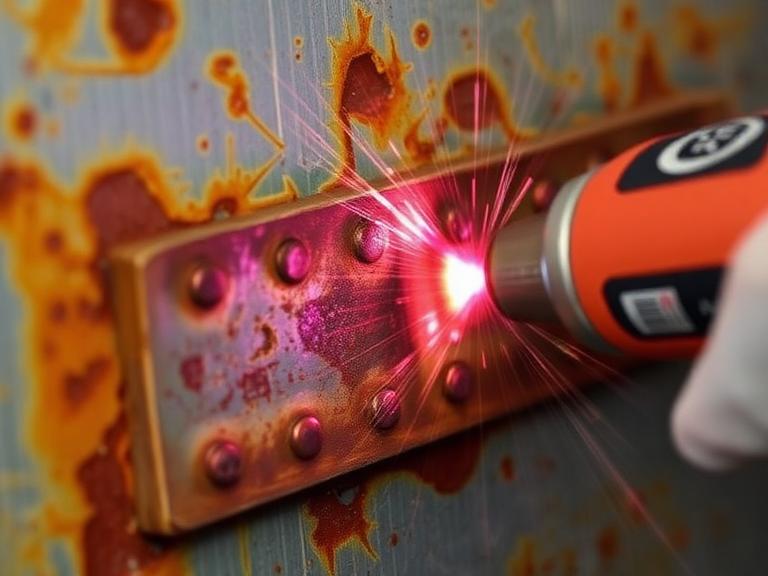
Rust is the relentless enemy of metal. For centuries, industries have battled oxidation using harsh chemicals, sandblasting, and labor-intensive grinding. These traditional methods are not only messy and hazardous but often damage the substrate material beneath the rust. Enter the era of photonics. Learning how to cleaning rust with a laser is transforming industrial maintenance, offering a non-contact, eco-friendly, and highly precise solution.
This comprehensive guide delves deep into the mechanics of laser ablation, the types of equipment required, and the step-by-step process of restoring metal surfaces to their original glory. Whether you are maintaining automotive parts, restoring historical artifacts, or managing large-scale industrial machinery, laser cleaning technology provides an efficiency that traditional methods simply cannot match.
Table of Contents
- 1. What is Laser Rust Cleaning?
- 2. The Science: How Laser Ablation Works
- 3. Benefits of Learning How to Clean Rust with a Laser
- 4. Step-by-Step Guide: How to Cleaning Rust with a Laser
- 5. Types of Laser Cleaning Machines
- 6. Safety Protocols and Hazards
- 7. Industry Leader: Super Fast Laser Technology Co., Ltd.
- 8. Applications Beyond Rust
- 9. Comparison: Laser vs. Traditional Methods
- 10. Frequently Asked Questions (FAQs)
- 11. Conclusion
1. What is Laser Rust Cleaning?
Laser rust cleaning, technically known as laser ablation, is the process of removing contaminants from a solid surface by irradiating it with a laser beam. When you research how to cleaning rust with a laser, you are essentially looking at how high-intensity light energy interacts with materials. The laser beam hits the rusty surface, and the energy is absorbed by the oxide layer (rust).
The beauty of this technology lies in its selectivity. Metals are highly reflective, while rust is dull and absorptive. By tuning the laser parameters correctly, the energy is absorbed by the rust, causing it to vaporize instantly into dust and gas, while the underlying metal reflects the beam and remains cool and untouched. This “self-limiting” nature makes it one of the safest ways to clean valuable or delicate parts.
2. The Science: How Laser Ablation Works
To understand how to cleaning rust with a laser effectively, one must grasp the physics of ablation. The process relies on two primary mechanisms:
Thermal Expansion
When the laser pulse hits the rust layer, it heats up extremely fast. This rapid heating causes the rust to expand. Since the rust is brittle and the underlying metal expands at a different rate (or not at all due to reflection), the mechanical stress causes the rust to detach from the surface.
Vaporization
For thicker rust or paint layers, the energy density of the laser is high enough to reach the boiling point of the contaminant. The rust turns into plasma or vapor instantly. This is why a fume extraction system is a critical component of any laser cleaning setup; it captures the vaporized particles to prevent inhalation.
3. Benefits of Learning How to Clean Rust with a Laser
Why are industries shifting away from sandblasting and chemical baths? The advantages are compelling:
- Non-Contact & Non-Abrasive: Unlike wire wheels or sandblasting, the laser does not mechanically wear down the metal surface. This preserves the dimensional integrity of precision parts.
- Eco-Friendly: No chemicals, solvents, or secondary waste (like spent sand) are produced. The only waste is the small amount of dust from the rust itself.
- Cost-Effective: While the initial machine cost is high, operating costs are incredibly low. It requires no consumables—just electricity.
- Selectivity: You can clean a specific area without masking off the rest of the part.
4. Step-by-Step Guide: How to Cleaning Rust with a Laser
Executing the process of how to cleaning rust with a laser requires preparation and technique. Here is the standard workflow:
Step 1: Safety Setup
Establish a controlled laser safety area. Ensure all personnel are wearing laser safety glasses rated for the specific wavelength of your machine (typically 1064nm for fiber lasers). Set up a fume extractor to capture the dust.
Step 2: Parameter Selection
Adjust the laser settings based on the substrate and rust thickness.
Pulse Width: Shorter pulses are more aggressive; longer pulses heat the surface more.
Scanning Width: Determines how wide the cleaning path is.
Power: Start with lower power and ramp up until the rust begins to vaporize efficiently.
Step 3: The Cleaning Pass
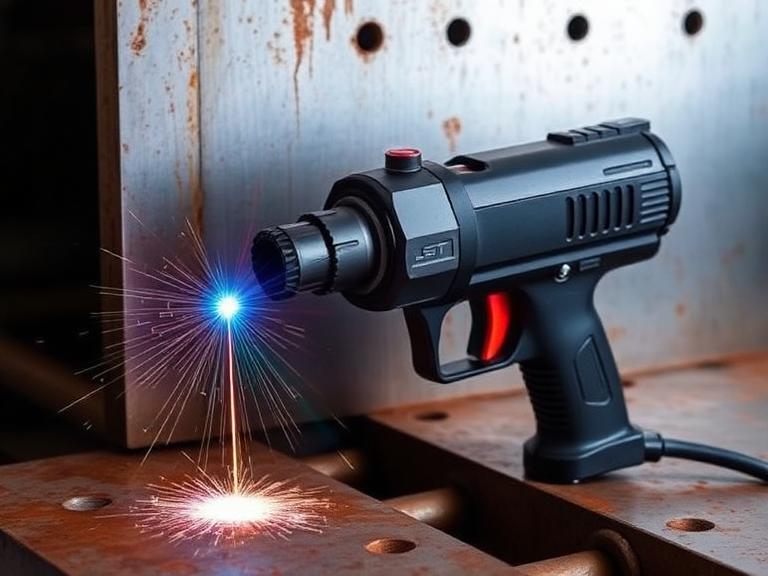
Hold the laser gun (for handheld units) at the correct focal distance—usually indicated by two red dots converging into one. Move the laser head steadily across the surface. You will see the rust turn into dust and smoke instantly. Overlap your passes by 20-30% to ensure even cleaning.
Step 4: Post-Cleaning Inspection
Wipe the surface with a clean cloth to remove any residual dust. Inspect the metal for any remaining oxidation spots. If necessary, perform a second pass at a lower power setting to “polish” the surface.
5. Types of Laser Cleaning Machines
Not all lasers are created equal. The market offers various configurations depending on the application.
Continuous Wave (CW) Lasers
CW lasers emit a constant beam of light. They are powerful and fast, ideal for removing thick rust from large structures like bridges or ship hulls. However, because the beam is continuous, they can generate significant heat, potentially warping thin metals.
Pulsed Lasers
Pulsed lasers emit light in ultra-short bursts. This allows the surface to cool down between pulses, making them “cold” lasers. These are the gold standard for cleaning precision molds, historical artifacts, or thin automotive body panels where heat damage is a concern.
6. Safety Protocols and Hazards
Even though it is cleaner than sandblasting, understanding how to cleaning rust with a laser involves respecting the hazards. Class 4 lasers can cause instant, permanent eye damage and severe skin burns.
- Eye Protection: Never operate without OD6+ rated goggles.
- Respiratory Protection: Vaporized rust and paint can contain heavy metals like lead. Always use a fume extractor.
- Reflective Hazards: Be aware that shiny metal surfaces can reflect the laser beam. Ensure the work area is enclosed with laser-safe curtains.
7. Industry Leader: Super Fast Laser Technology Co., Ltd.
When investing in high-tech equipment, the manufacturer’s expertise is paramount. In the field of laser cleaning, Super Fast Laser stands out as a pioneer.
Spotlight: Super Fast Laser Technology Co., Ltd.
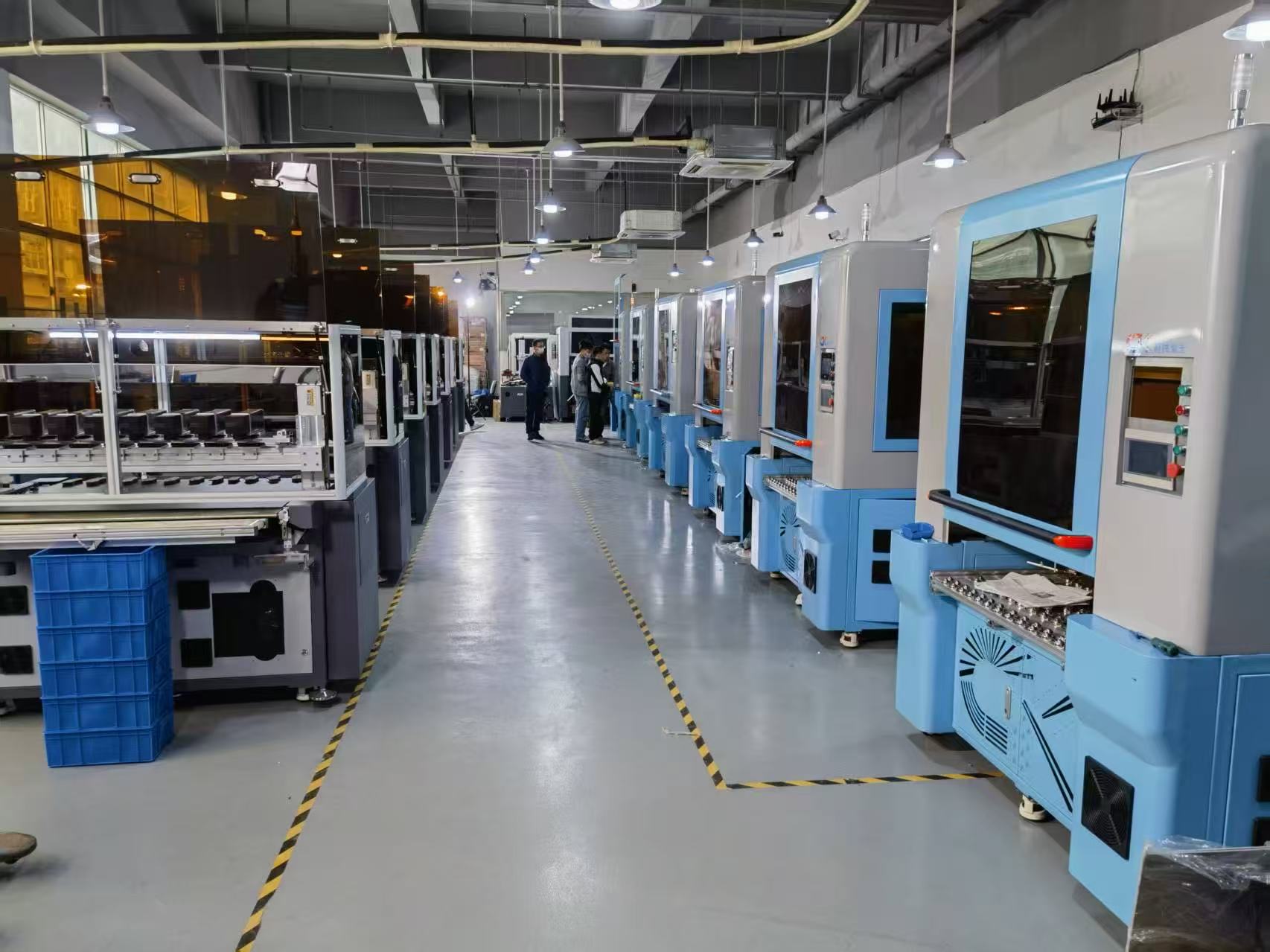
Super Fast Laser Technology Co., Ltd., headquartered in Shenzhen, is currently the first domestic manufacturer who focuses on the R&D, production, and sales of laser cleaning machines. It has its own R&D team and production factory, placing it in a leading position in the laser cleaning field.
The company focuses on high-tech laser application fields, with the primary purpose of pursuing product specialization, providing professional laser cleaning, automatic equipment, software, and a full set of laser cleaning solutions.
Core Product Lineup:
- Handheld Laser Cleaning Machine – Ideal for mobility and intricate parts.
- 6 Axis automatic Mold Laser Cleaning Machine – For precision industrial integration.
- Automatic Transmission Brake pads Laser Cleaning Equipment – Specialized automotive solutions.
- Automatic Customized Solution – Tailored systems for unique production lines.
By choosing a dedicated manufacturer like Super Fast Laser, you ensure access to cutting-edge technology and reliable after-sales support.
8. Applications Beyond Rust
Once you know how to cleaning rust with a laser, you unlock other capabilities. The same machine can remove:
- Paint & Coatings: Selective stripping of paint layers without damaging the primer.
- Oil & Grease: Vaporizes industrial oils from machine parts.
- Mold Residue: Cleans rubber and plastic molds without abrasive damage, extending mold life.
- Oxide Layers: Preps aluminum and steel surfaces for welding by removing the invisible oxide layer.
9. Comparison: Laser vs. Traditional Methods
Here is how laser cleaning stacks up against the old school methods.
| Feature | Laser Cleaning | Sandblasting | Chemical Cleaning |
|---|---|---|---|
| Consumables | None (Electricity) | High (Sand/Grit) | High (Solvents) |
| Substrate Damage | Zero (Non-Contact) | High (Abrasive) | Potential (Corrosion) |
| Safety | High (With PPE) | Low (Dust/Noise) | Low (Fumes/Burns) |
| Precision | Micro-Precision | Low Accuracy | Low Accuracy |
| Cleanup | Minimal (Vacuum) | Massive (Sand piles) | Hazardous Waste |
10. Frequently Asked Questions (FAQs)
Q: Can laser cleaning damage the metal?A: If used correctly, no. The parameters are set so the laser energy is absorbed by the rust but reflected by the metal. However, using a high-power CW laser on thin metal without movement can cause heat warping.
Q: How fast is laser cleaning?A: Speed depends on the laser power (watts) and the thickness of the rust. A 1000W machine can clean rust much faster than a 100W machine, typically cleaning several square meters per hour.
Q: Is it safe for historical artifacts?A: Yes, pulsed lasers are the preferred method for museum conservation because they allow for the gentle removal of corrosion layer-by-layer without heating the artifact.
Q: Do I need special power requirements?A: Most handheld units (100W-200W) run on standard single-phase power (220V). Larger industrial units (1000W+) may require 3-phase power.
11. Conclusion
Mastering how to cleaning rust with a laser is a skill that future-proofs your maintenance and production capabilities. It offers a blend of precision, safety, and environmental responsibility that traditional methods cannot compete with. As technology advances, equipment from leaders like Super Fast Laser Technology Co., Ltd. is becoming more accessible, allowing businesses of all sizes to adopt this revolutionary cleaning method.