- Ziva@CKlasersz.com
- WeChat:86-13138536413
- 400-168-9906
- 0755 27084852






In the modern manufacturing and industrial maintenance sectors, efficiency is the ultimate currency. As facilities transition away from archaic, environmentally hazardous surface preparation methods like sandblasting and chemical etching, optical ablation technology has taken center stage. However, the most frequent inquiry we receive from production engineers and facility managers revolves around one critical metric: What exactly is the cleaning speed of laser rust removal machines? Understanding this operational variable is absolutely essential for calculating return on investment, determining production throughput, and integrating these systems into automated assembly lines.
From our experience at Super Fast Laser, the cleaning speed of laser rust removal machines is not a static, singular number. It is a highly dynamic performance indicator influenced by a multitude of factors, including the laser’s power output, the optical configuration, the nature of the substrate, and the specific composition of the oxidation layer being targeted. To simply state a generic square-meter-per-hour rate without addressing these underlying variables is misleading and fails to provide industry professionals with the actionable data they need.
We recommend a thorough, technical evaluation of how photonic energy interacts with ferrous oxides to truly grasp what dictates throughput. In this authoritative guide, we will dissect the physics of laser ablation, explore the key factors that accelerate or hinder the cleaning speed of laser rust removal machines, and showcase how specialized equipment—such as the Super Fast Laser Automatic Brake Pad Cleaning Machine—is engineered to maximize industrial efficiency.
Table of Contents
- The Physics Behind the Cleaning Speed of Laser Rust Removal Machines
- Key Factors Influencing Laser Cleaning Speed
- Summary Table: Baseline Cleaning Speeds by Laser Power
- The Super Fast Laser Solution: Brake Pad Manufacturing
- Technical Specifications of Our High-Speed System
- How to Maximize the Cleaning Speed of Laser Rust Removal Machines
- Frequently Asked Questions (FAQs)
- References and Industry Citations
The Physics Behind the Cleaning Speed of Laser Rust Removal Machines
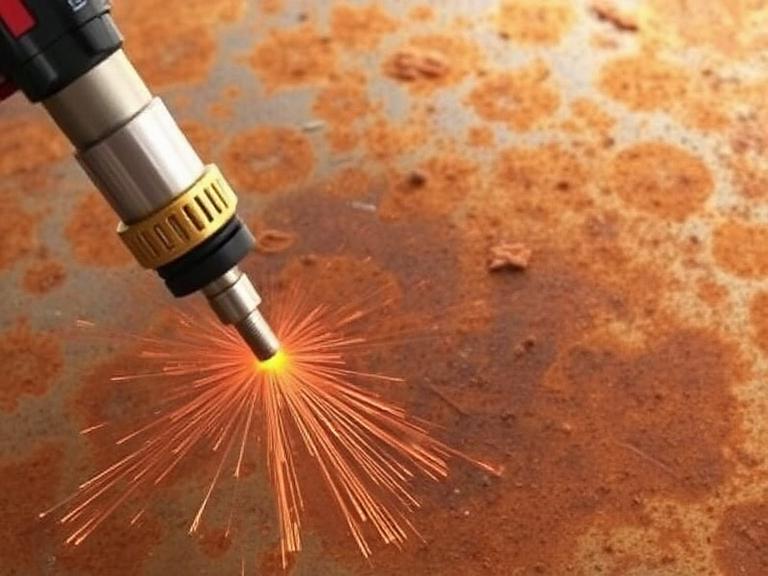
To accurately evaluate the cleaning speed of laser rust removal machines, one must first comprehend the underlying principle of laser ablation. When a high-intensity laser beam is directed at a contaminated metallic surface, the rust layer absorbs the concentrated photonic energy. This rapid absorption causes the contamination layer to heat up exponentially, expand, and either vaporize into a gas or sublimate instantly. Because oxides, paints, and organic contaminants absorb specific light wavelengths much more readily than bare metal, the process is incredibly selective.
The base metal, which typically has a high damage threshold and high reflectivity at the 1064nm wavelength, reflects the remaining laser energy, leaving the substrate completely untouched and thermally stable. The cleaning speed of laser rust removal machines is intrinsically tied to the ablation threshold. This threshold represents the minimum optical energy density (fluence) required to initiate the removal of a specific material. When the laser delivers energy precisely above this threshold, the cleaning process is optimized for maximum speed. Conversely, applying an incorrect focal length or insufficient energy will drastically reduce the cleaning speed of laser rust removal machines, resulting in inefficient heating rather than rapid vaporization.
Key Factors Influencing Laser Cleaning Speed
From our extensive field experience and laboratory testing at Super Fast Laser, we have identified several critical variables that dramatically alter real-world processing times. We highly recommend that buyers evaluate these factors holistically rather than fixating solely on the continuous wave (CW) wattage of a machine.
Average Power vs. Peak Power
The most heavily advertised specification in the optical cleaning industry is the continuous or average power, measured in watts. Generally, a higher continuous wattage correlates to a faster cleaning speed of laser rust removal machines. A 1200W system will inherently process a heavily oxidized steel plate much faster than a 200W system. However, peak power is arguably the more critical metric for actual rust eradication. Pulsed fiber lasers deliver energy in nanosecond or picosecond bursts. A high peak power creates a photomechanical shockwave that shatters the rust’s bond to the substrate without inducing thermal warping. Consequently, maximizing peak power directly enhances the cleaning speed of laser rust removal machines by allowing for faster scanning rates.
Rust Density, Thickness, and Composition
The morphology of the oxidation layer plays a massive role in dictating the cleaning speed of laser rust removal machines. Light surface flash rust, often found on newly milled steel components exposed to ambient humidity, requires minimal energy to vaporize, allowing for exceptionally rapid processing speeds. In contrast, heavily pitted, decades-old marine rust or dense rolling mill scale requires significantly more energy and potentially multiple passes to eradicate entirely. The denser the oxide layer, the more optical energy must be absorbed to achieve sublimation. Therefore, the cleaning speed of laser rust removal machines will always be exponentially higher on superficial oxidation compared to deep-seated, structural corrosion.
Substrate Material Reflectivity
The material beneath the rust also heavily influences operational throughput. The cleaning speed of laser rust removal machines is optimized when the underlying substrate is highly reflective, such as polished carbon steel, aluminum, or brass. This high reflectivity creates a sharp contrast in energy absorption; the rust absorbs the beam, and the metal bounces it away. This allows operators or automated systems to run the laser at maximum speed without the risk of damaging the base material. If the substrate is dark or highly textured, operators must often reduce the processing speed to ensure they do not exceed the thermal threshold of the metal, thereby lowering the overall cleaning speed of laser rust removal machines.
Summary Table: Baseline Cleaning Speeds by Laser Power
To provide actionable benchmarks for production planning, we have compiled a summary table detailing baseline expectations. Please note that these figures represent ideal conditions on standard carbon steel. The actual cleaning speed of laser rust removal machines will vary based on automation integration, environmental variables, and the specific chemical composition of the rust.
| Laser Power Output | Target Contamination | Estimated Cleaning Speed (m²/hour) | Ideal Industrial Application |
|---|---|---|---|
| 100W – 200W | Light flash rust, localized oils | 1.5 – 3.5 m²/h | Injection mold cleaning, historical restoration, localized weld prep |
| 300W – 500W | Moderate rust, light paint removal | 4.0 – 9.0 m²/h | Automotive parts restoration, aviation maintenance, pipeline spot checks |
| 1000W – 1500W | Heavy structural rust, thick mill scale | 12.0 – 20.0 m²/h | Automated brake pad manufacturing, shipbuilding, heavy machinery overhaul |
| 2000W+ | Extreme marine corrosion, thick epoxy coatings | 25.0 – 40.0 m²/h | Bridge infrastructure maintenance, military vessel preservation |
The Super Fast Laser Solution: Brake Pad Manufacturing
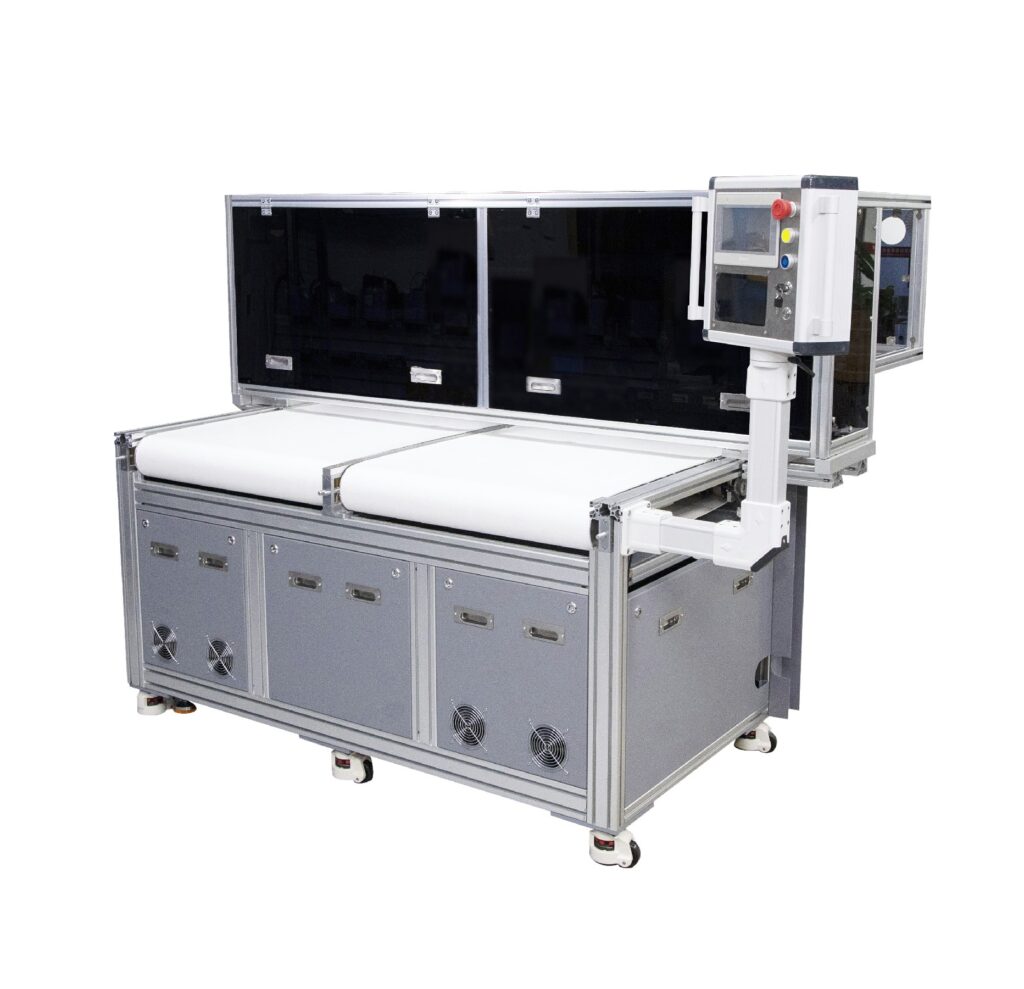
Generic, handheld laser systems often fall short when applied to specific, high-volume production lines because their optics and automation interfaces are not tuned for dedicated, repetitive tasks. At Super Fast Laser, we recognize that the cleaning speed of laser rust removal machines must align perfectly with the rigorous takt times of modern automated assembly lines.
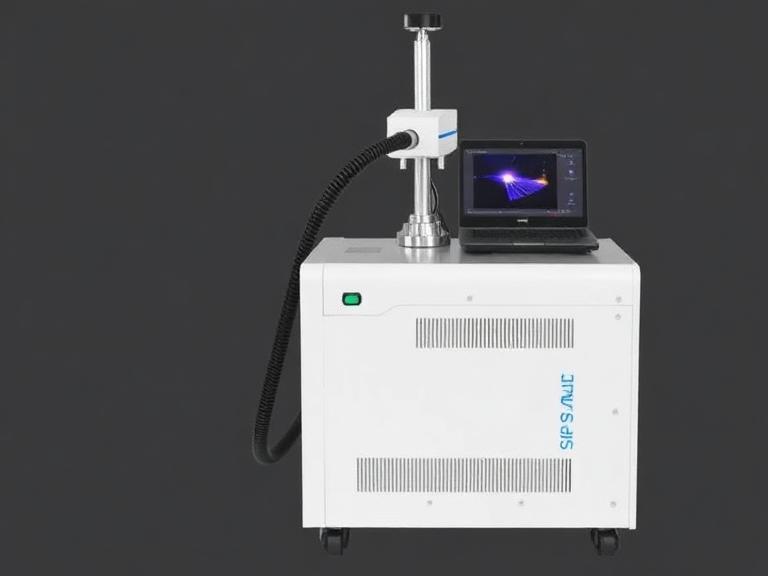
A prime example of our engineering philosophy is the Super Fast Laser Automatic Brake Pad Cleaning Machine. Automotive brake pad manufacturing requires the steel backing plates to be absolutely free of rust, stamping oils, and scale before the friction material is bonded. Any residual contamination can lead to catastrophic brake failure and severe liability. Traditional media blasting is slow, leaves particulate residue, and requires massive dust collection infrastructure. We engineered our specific automated machine to maximize the cleaning speed of laser rust removal machines within a continuous automation cell, ensuring pristine surface preparation at the speed of modern manufacturing.
Technical Specifications of Our High-Speed System
We recommend reviewing the robust technical specifications that allow our unit to achieve unprecedented processing speeds and reliability in a continuous production environment. The combination of high average power and massive peak power is the secret to our superior cleaning speed of laser rust removal machines.
| Specification Category | Super Fast Laser Technical Data |
|---|---|
| Laser power | 1200W |
| Peak power | 35KW |
| Laser wavelength | 1064nm |
| Supply voltage | 220/AC |
| Current consumption | Pout=ponm/5A |
| Fiber optic cables | 5 meters standard |
| Cooling method | Air cooling |
| Laser Class | Level 4 |
| Warm-up time | 10-30m |
| Operating temperature | 0-40°C |
| Storage temperature | 0-40°C |
| Machine Size | L2029 * W880 * H1548 mm |
| Machine weight | 500/kgs |
By utilizing a robust 1200W laser source combined with an astonishing 35KW peak power output, the Super Fast Laser system vaporizes rust and bonding adhesives instantaneously. The 1064nm wavelength is perfectly absorbed by ferric oxides, ensuring maximum efficiency. Furthermore, the integration of an advanced air-cooling system reduces maintenance downtime and facility footprint compared to bulky water-chilled systems. From our experience, deploying a targeted, high-peak-power system dramatically increases the cleaning speed of laser rust removal machines over generic units, allowing brake pad manufacturers to process thousands of backing plates per shift flawlessly.
How to Maximize the Cleaning Speed of Laser Rust Removal Machines
Procuring a high-wattage laser is only the first step toward operational excellence. To truly maximize the cleaning speed of laser rust removal machines, facility workflows and operational methodologies must be strictly refined. We recommend the following best practices for industrial plant managers looking to optimize throughput:
First and foremost, focal distance optimization is non-negotiable. Laser energy is only effective when focused precisely on the surface contamination layer. If the robotic arm or manual operator deviates from the exact focal length of the galvo-scanner lens, the energy density drops precipitously, and the cleaning speed of laser rust removal machines will plummet. Implementing mechanical stand-offs, jigs, or automated focal-tracking sensors is highly advised to maintain maximum ablation efficiency throughout the entire production run.
Secondly, scanning pattern selection heavily dictates speed. Modern laser controllers allow the beam to oscillate in lines, circles, figure-eights, or complex geometric patterns. For thick, stubborn rust, a tight, slow circular pattern allows for deeper thermal penetration. For light flash rust on flat plates, a wide, rapid linear scanning pattern covers maximum surface area in minimum time. Training operators or programming robots to match the specific scanning pattern to the contamination type is the most cost-effective way to improve the cleaning speed of laser rust removal machines.
Finally, preventative optical maintenance is critical. The protective field lens on the laser delivery head can become coated in vaporized dust if the local fume extraction system is inadequate. A dirty lens blocks optical energy, absorbs heat, and distorts the beam profile. This not only drastically reduces the cleaning speed of laser rust removal machines but can also permanently destroy the expensive internal optics. Proper, high-velocity ventilation and daily lens inspections are mandatory for high-speed, continuous operations.
Frequently Asked Questions (FAQs)
Does a faster cleaning speed of laser rust removal machines mean the base metal is more likely to get damaged?
No, typically the exact opposite is true in the realm of laser ablation. A faster cleaning speed means the laser energy spends significantly less time dwelling on any single point, which vastly reduces the thermal input into the substrate. As long as the laser parameters are correctly set for the ablation threshold of the rust, a high-speed pass will leave the base metal completely cold, metallurgically unaltered, and undamaged.
How does the cleaning speed of laser rust removal machines compare to traditional industrial sandblasting?
For heavy, thick mill scale covering massive, unrefined areas like ship hulls, heavy-duty industrial sandblasting can still be faster in terms of raw square footage per hour. However, when you factor in the massive time required for post-process cleanup, media recovery, masking sensitive adjacent areas, and the logistics of secondary waste disposal, the overall operational cleaning speed of laser rust removal machines is often far superior for precision manufacturing, assembly lines, and part restoration.
Why is peak power so important for the cleaning speed of laser rust removal machines, as seen in the Super Fast Laser specs?
Peak power determines the “shockwave” or photomechanical effect of the laser pulse. High peak power (such as the 35KW generated by our specific machine) shatters the molecular bonds of the rust instantly without relying purely on heat. Machines with low peak power but high continuous power rely more on thermal melting, which is slower, less efficient, and risks heating the substrate. Therefore, high peak power directly and safely accelerates the cleaning speed of laser rust removal machines.
Can the Super Fast Laser Automatic Brake Pad Cleaning Machine handle contaminants other than rust?
Absolutely. While specifically engineered to optimize the cleaning speed of laser rust removal machines for steel backing plates, the 1064nm wavelength is highly versatile. It is exceptionally effective at vaporizing stamping grease, machine oils, old paint, epoxy residues, and bonding adhesives from metallic surfaces, all without altering the base material’s dimensional geometry.
References and Industry Citations
1. Society of Manufacturing Engineers (SME). (2024). “Laser Surface Cleaning: Parameter Optimization, Takt Time Analysis, and Substrate Integrity.” Journal of Modern Fabrication Technologies.
2. International Journal of Advanced Manufacturing Technology. (2023). “A Comparative Study of Continuous Wave vs. Pulsed Fiber Lasers in Ferrous Oxide Eradication Speeds.”