- Ziva@CKlasersz.com
- WeChat:86-13138536413
- 400-168-9906
- 0755 27084852






Escrito por Láser superrápido
La preparación y restauración de superficies industriales han experimentado un cambio tecnológico radical. El chorro abrasivo y los disolventes químicos están siendo sustituidos rápidamente por la ablación fotónica. Cuando los responsables de instalaciones y los contratistas industriales deciden adquirir tecnología de máquinas de limpieza por láser, están invirtiendo en precisión, cumplimiento de la normativa medioambiental y reducción de costes a largo plazo. Sin embargo, analizar las especificaciones relativas a la potencia óptica, la duración del pulso y los sistemas de emisión requiere un profundo conocimiento técnico.
En Super Fast Laser Technology Co., Ltd., con sede en Shenzhen, nos enorgullece ser el primer fabricante nacional dedicado exclusivamente a la I+D, la producción y la venta de máquinas de limpieza por láser. El hecho de contar con nuestro propio equipo de I+D y nuestra propia planta de producción nos sitúa en una posición de liderazgo en el sector de la limpieza por láser. Gracias a nuestra experiencia como proveedores de clientes industriales de primer nivel en todo el mundo, sabemos exactamente qué parámetros determinan el éxito operativo. Recomendamos seguir una estrategia de adquisición estructurada, en lugar de basar la compra únicamente en la potencia en vatios.
Esta completa guía técnica recoge los diez consejos fundamentales que debes tener en cuenta a la hora de adquirir sistemas de limpieza por láser en 2026. Tanto si se trata de eliminar la oxidación del acero estructural pesado como de restaurar delicados objetos históricos, es fundamental elegir la fuente láser adecuada para cada sustrato.
Índice
- Tabla resumen: Factores clave en la contratación pública
- Consejo n.º 1: Comprender la diferencia entre los láseres pulsados y los de onda continua (CW)
- Consejo n.º 2: Adapta la potencia de salida al tipo de contaminante
- Consejo n.º 3: Evalúa la portabilidad y el diseño
- Consejo n.º 4: Analiza detenidamente la configuración del sistema de refrigeración
- Consejo n.º 5: Calcula el coste total de propiedad
- Consejo n.º 6: Analiza el cabezal de escaneo y los componentes ópticos
- Consejo n.º 7: Ten en cuenta el material específico del sustrato
- Consejo n.º 8: Comprueba las prestaciones del software de control
- Consejo n.º 9: Evalúa el retorno de la inversión (ROI) y la rentabilidad operativa
- Consejo n.º 10: Exige asistencia directa del fabricante
- Preguntas más frecuentes (FAQ)
- Referencias del sector
Tabla resumen: Factores clave en la contratación pública
Antes de adquirir equipos de limpieza por láser, consulta esta tabla resumen técnico para ajustar tus necesidades operativas a las especificaciones de hardware adecuadas.
| Consideración | Especificaciones técnicas | Aplicación principal |
|---|---|---|
| Tipo de fuente láser | Onda pulsada frente a onda continua (OC) | Modo pulsado para la limpieza de piezas delicadas o moldes; modo continuo (CW) para la eliminación de óxido persistente |
| Potencia óptica de salida | De 100 W a más de 3000 W | Baja potencia para la restauración histórica; alta potencia para aplicaciones marítimas e industriales |
| Mecanismo de refrigeración | Refrigeración por aire frente a refrigeración por agua | Aire, para facilitar su transporte (<200 W); agua, para ciclos de funcionamiento continuos a alta potencia |
| Ancho de escaneo | De 10 mm a más de 300 mm | Estrecho para soldaduras de precisión; ancho para la preparación de superficies de paneles grandes |
| Factor de forma | Mochila, armario o brazo robótico | Mochila para trabajo de campo; Armario para talleres; Robótica para líneas de montaje |
Consejo n.º 1: Comprender la diferencia entre los láseres pulsados y los de onda continua (CW)
La decisión más importante que tomarás a la hora de adquirir sistemas de limpieza por láser es la elección de la fuente láser. Los láseres de onda continua (CW) emiten un haz de luz ininterrumpido, lo que los hace muy eficaces para la eliminación rápida y agresiva de óxido grueso o recubrimientos marinos pesados sobre acero de gran espesor. Sin embargo, los láseres CW generan un calor intenso en el sustrato, lo que puede deformar los metales finos o dañar los materiales base sensibles.
Por el contrario, los láseres pulsados emiten luz en ráfagas de nanosegundos. Esto genera una potencia máxima elevada que vaporiza el contaminante antes de que la energía térmica pueda transferirse al sustrato. Según nuestra experiencia, si vas a limpiar moldes de inyección, componentes aeroespaciales o materiales naturales, es imprescindible utilizar un láser pulsado. Por ejemplo, puedes consultar nuestro análisis técnico sobre cómo seleccionar el mejor máquina de limpieza láser para madera para comprender por qué el control de los impulsos es fundamental para evitar que se queme la carne.
Consejo n.º 2: Adapta la potencia de salida al tipo de contaminante
Muchos compradores dan por sentado que una potencia mayor equivale a una máquina mejor. Se trata de un error muy costoso. Al adquirir equipos de limpieza por láser, la potencia debe ajustarse al umbral de ablación del contaminante en cuestión. Un láser pulsado de 100 W es ideal para eliminar residuos de aceite ligero, restauraciones históricas y la limpieza previa a la soldadura. Es necesario pasar a 500 W o 1000 W en el caso de pinturas epoxi gruesas u oxidación intensa. Recomendamos analizar su caso de uso principal; si la corrosión industrial grave es su lucha diaria, le recomendamos explorar el máquinas de limpieza láser para la eliminación de óxido te orientará para elegir los sistemas adecuados de onda continua (CW) de varios kilovatios o de alta potencia pulsada.
Consejo n.º 3: Evalúa la portabilidad y el diseño
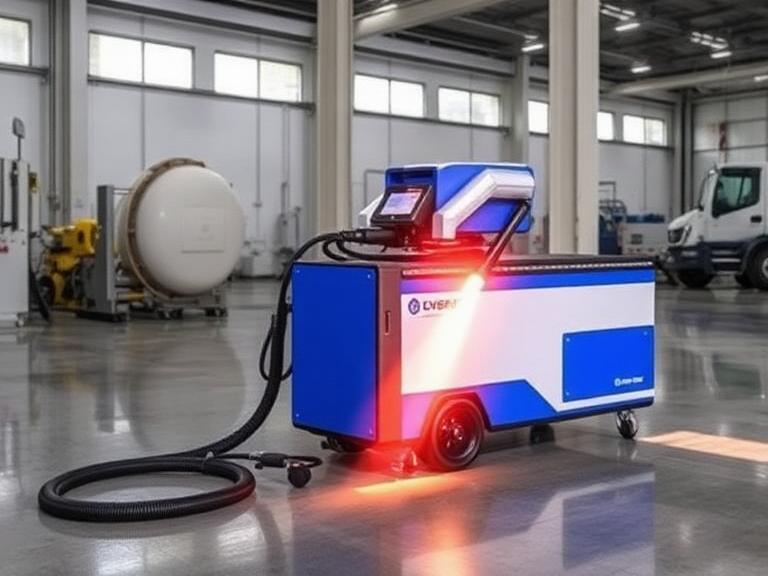
¿Dónde se llevará a cabo la limpieza? Si gestionas una línea de fabricación fija, lo ideal es una máquina grande tipo armario integrada en una célula robótica. Sin embargo, si prestas servicios de limpieza por encargo en astilleros, refinerías u obras de construcción, la movilidad es tu principal preocupación. A la hora de adquirir equipos de limpieza por láser para el servicio sobre el terreno, comprueba el peso, la configuración de las ruedas y la resistencia del chasis. Para conocer los últimos avances en diseños compactos, te recomendamos que consultes los mejores máquinas móviles de limpieza láser 2026.
Consejo n.º 4: Analiza detenidamente la configuración del sistema de refrigeración
Los láseres generan cargas térmicas importantes. La eficiencia del sistema de refrigeración influye directamente en el ciclo de trabajo de su equipo. Los sistemas pulsados de baja potencia (normalmente por debajo de 200 W) suelen poder utilizar refrigeración por aire, lo que los hace más ligeros y fáciles de transportar. Los sistemas de alta potencia requieren sin duda alguna robustos enfriadores de agua. Al adquirir sistemas de limpieza por láser de más de 1000 W, asegúrese de que el enfriador utilice circuitos de control de temperatura duales —uno para la fuente láser y otro para el cabezal óptico— para evitar la condensación en las lentes en condiciones de funcionamiento con humedad.
Consejo n.º 5: Calcula el coste total de propiedad
La inversión inicial necesaria para adquirir equipos de limpieza por láser es solo una parte de la ecuación financiera. A diferencia del chorro abrasivo, los láseres no requieren materiales consumibles como la arena o el hielo seco, y no generan residuos secundarios que requieran una eliminación especial por ser peligrosos. El principal coste operativo es la electricidad y la sustitución ocasional de las lentes protectoras. A la hora de evaluar los costes iniciales de hardware, especialmente en mercados regionales específicos, conviene consultar guías como la pequeña máquina de limpieza láser precio Australia puede ayudarte a comparar los precios internacionales con los precios nacionales que ofrecen los propios fabricantes.
Consejo n.º 6: Analiza el cabezal de escaneo y los componentes ópticos
El cabezal de barrido (la pistola física que sujeta el operario) determina la proyección del haz. Utiliza espejos oscilantes internos (galvanómetros) para barrer la superficie con el haz láser. Al adquirir equipos de limpieza por láser, comprueba las capacidades de anchura de barrido. Un escáner de alta calidad ofrecerá anchos ajustables desde 10 mm hasta 300 mm. Además, recomendamos elegir cabezales de limpieza ergonómicos y ligeros (menos de 1,5 kg) para reducir la fatiga del operario durante los turnos de ocho horas.
Consejo n.º 7: Ten en cuenta el material específico del sustrato
La ablación por láser se basa en las diferentes tasas de absorción entre el contaminante y el sustrato. Una longitud de onda de 1064 nm (estándar para los láseres de fibra) es absorbida en gran medida por el óxido y la pintura, pero se refleja en el aluminio y el acero sin recubrimiento, deteniendo el proceso de limpieza precisamente en el metal base. Sin embargo, si el sustrato es muy reflectante (como el cobre pulido o el latón), debe asegurarse de que la fuente láser incorpore aisladores específicos con protección antirreflectante; de lo contrario, la luz reflejada destruirá el oscilador láser. Recomendamos consultar directamente con nuestro equipo de ingeniería para realizar pruebas con muestras de sus materiales específicos antes de adquirir sistemas de limpieza por láser.
Consejo n.º 8: Comprueba las prestaciones del software de control
La interfaz de usuario es el cerebro de tu operación. Los limpiadores láser modernos deben contar con interfaces intuitivas de pantalla táctil que permitan a los operarios guardar perfiles de parámetros específicos. Si el lunes limpias bloques de motor y el martes bandejas de horno delicadas, la posibilidad de recuperar al instante la frecuencia de pulso, la velocidad de barrido y el perfil de potencia exactos evita los errores del operario. Evita las máquinas con software cerrado y propietario que impida el ajuste preciso de los parámetros.
Consejo n.º 9: Evalúa el retorno de la inversión (ROI) y la rentabilidad operativa
Para las empresas de servicios, la decisión de adquirir tecnología de máquinas de limpieza por láser viene motivada por un rápido retorno de la inversión. La velocidad de una limpiadora láser se traduce directamente en metros cuadrados facturables. Aunque una máquina de 100 W pueda resultar más barata, una de 1000 W completará el trabajo diez veces más rápido, lo que aumentará drásticamente tu margen de beneficio por hora. Para presupuestar los trabajos con precisión y prever tu retorno de la inversión, te recomendamos encarecidamente que utilices nuestro desglose en servicio de limpieza láser coste por pie cuadrado.
Consejo n.º 10: Exige asistencia directa del fabricante
El mercado de los láseres industriales está saturado de empresas comercializadoras que reetiquetan equipos sin comprender la ingeniería fotónica subyacente. Cuando adquiera sistemas de limpieza por láser, hágalo directamente a un fabricante primario como Super Fast Laser Technology Co., Ltd. Contamos con nuestro propio centro de I+D, lo que significa que controlamos el código fuente, la alineación óptica y la integración de los componentes. Esto garantiza que, si se enfrenta a un reto industrial muy específico, reciba asistencia técnica directa, en lugar de respuestas tardías por parte de un intermediario.
Preguntas más frecuentes (FAQ)
¿Qué equipo de protección es necesario para manejar una máquina de limpieza por láser?
Los limpiadores láser son dispositivos láser de clase 4. El operario y cualquier persona que se encuentre en las inmediaciones deben llevar gafas de seguridad para láser homologadas específicamente para la longitud de onda de 1064 nm (la densidad óptica OD6+ es la norma). Además, se requiere un sistema de extracción de humos para capturar la pintura, el óxido o los aceites vaporizados, con el fin de evitar la inhalación de partículas peligrosas.
¿Puedo adquirir tecnología de máquinas de limpieza por láser para limpiar plástico o fibra de vidrio?
Por lo general, los láseres de fibra estándar de 1064 nm no son ideales para sustratos orgánicos como el plástico o la fibra de vidrio, ya que la energía del láser puede fundir o quemar el material base antes de eliminar el contaminante. Para estos sustratos delicados se requieren láseres ultravioleta (UV) o láseres de pulso ultracorto altamente específicos. Recomendamos consultar a nuestros ingenieros para aplicaciones no metálicas.
¿La limpieza con láser altera la textura de la superficie del metal?
Cuando se calibra correctamente, un láser pulsado no altera la textura de la superficie, no funde el metal ni crea microfisuras. Es un proceso no abrasivo y no cinético. Esto lo hace muy superior al chorro de arena, que erosiona físicamente el sustrato y altera las tolerancias dimensionales.
¿Cuál es la vida útil de una fuente láser de fibra?
Las fuentes láser de fibra de alta calidad utilizadas en máquinas de limpieza industrial tienen una vida útil de hasta 100.000 horas (tiempo medio entre fallos). Con un mantenimiento adecuado de la óptica externa y del refrigerador, la máquina proporcionará más de una década de servicio fiable.
Referencias del sector
Para garantizar los más altos niveles de seguridad industrial y precisión tecnológica, los principios que se exponen en esta guía se ajustan a las normas fotónicas y de fabricación mundiales. Animamos a los responsables de las instalaciones a consultar los siguientes recursos autorizados: