- Ziva@CKlasersz.com
- WeChat:86-13138536413
- 400-168-9906
- 0755 27084852

10 Expert Tips to Buy Laser Cleaning Machine Equipment in 2026

10 Expert Tips to Buy Laser Cleaning Machine Equipment in 2026
Written by 超快激光
Industrial surface preparation and restoration have undergone a massive technological shift. Abrasive blasting and chemical solvents are rapidly being replaced by photonic ablation. When facility managers and industrial contractors decide to buy laser cleaning machine technology, they are investing in precision, environmental compliance, and long-term cost reduction. However, navigating the specifications of optical power, pulse duration, and delivery systems requires deep technical knowledge.

At Super Fast Laser Technology Co.,Ltd., headquartered in Shenzhen, we are proud to be the first domestic manufacturer focusing exclusively on the R&D, production, and sales of laser cleaning machines. Operating our own R&D team and production factory places us in a leading position in the laser cleaning field. From our experience supplying tier-one industrial clients globally, we know exactly what parameters dictate operational success. We recommend following a structured procurement strategy rather than purchasing based on wattage alone.
This comprehensive engineering guide outlines the ten critical tips you must consider when you buy laser cleaning machine systems in 2026. Whether you are removing oxidation from heavy structural steel or restoring delicate historical artifacts, matching the laser source to your substrate is paramount.
目录
- Summary Table: Key Procurement Factors
- Tip 1: Understand the Difference Between Pulsed and Continuous Wave (CW) Lasers
- Tip 2: Match the Power Output to Your Contaminant
- Tip 3: Evaluate Portability and Form Factor
- Tip 4: Scrutinize the Cooling System Configuration
- Tip 5: Calculate the Total Cost of Ownership
- Tip 6: Analyze the Scanning Head and Optics
- Tip 7: Consider the Specific Substrate Material
- Tip 8: Verify Control Software Capabilities
- Tip 9: Assess ROI and Operational Profitability
- Tip 10: Demand Direct Manufacturer Support
- 常见问题(FAQ)
- 行业参考
Summary Table: Key Procurement Factors
Before you buy laser cleaning machine equipment, review this technical summary matrix to align your operational needs with the correct hardware specifications.
| Consideration | Technical Specification | 主要应用 |
|---|---|---|
| Laser Source Type | 脉冲与连续波(CW) | Pulsed for delicate/mold cleaning; CW for heavy rust removal |
| Optical Power Output | 100W to 3000W+ | Low power for historical restoration; High power for maritime/industrial |
| Cooling Mechanism | Air Cooled vs. Water Chiller | Air for portability (<200W); Water for continuous high-power duty cycles |
| Scanning Width | 10mm to 300mm+ | Narrow for precision welds; Wide for large panel surface prep |
| Form Factor | Backpack vs. Cabinet vs. Robotic Arm | Backpack for field work; Cabinet for shop floors; Robotic for assembly lines |
Tip 1: Understand the Difference Between Pulsed and Continuous Wave (CW) Lasers
The most critical decision you will make when you buy laser cleaning machine systems is selecting the laser source. Continuous Wave (CW) lasers emit an uninterrupted beam of light, making them highly effective for rapid, aggressive removal of thick rust or heavy marine coatings on thick steel. However, CW lasers introduce massive heat into the substrate, which can warp thin metals or damage sensitive base materials.
Conversely, pulsed lasers emit light in nanosecond bursts. This creates high peak power that vaporizes the contaminant before thermal energy can transfer to the substrate. From our experience, if you are cleaning injection molds, aerospace components, or natural materials, a pulsed laser is mandatory. For instance, you can review our technical breakdown on selecting the 最好的木材激光清洗机 to understand why pulse control is vital to prevent charring.
Tip 2: Match the Power Output to Your Contaminant
Many buyers assume that higher wattage equates to a better machine. This is a costly misconception. When you buy laser cleaning machine equipment, the wattage must align with the ablation threshold of your target contaminant. A 100W pulsed laser is ideal for removing light oil residues, historical restoration, and pre-weld cleaning. Moving up to 500W or 1000W is necessary for thick epoxy paints or heavy oxidation. We recommend analyzing your primary use case; if heavy industrial corrosion is your daily battle, exploring the laser cleaning machines for rust removal will guide you toward the appropriate multi-kilowatt CW or high-power pulsed systems.
Tip 3: Evaluate Portability and Form Factor
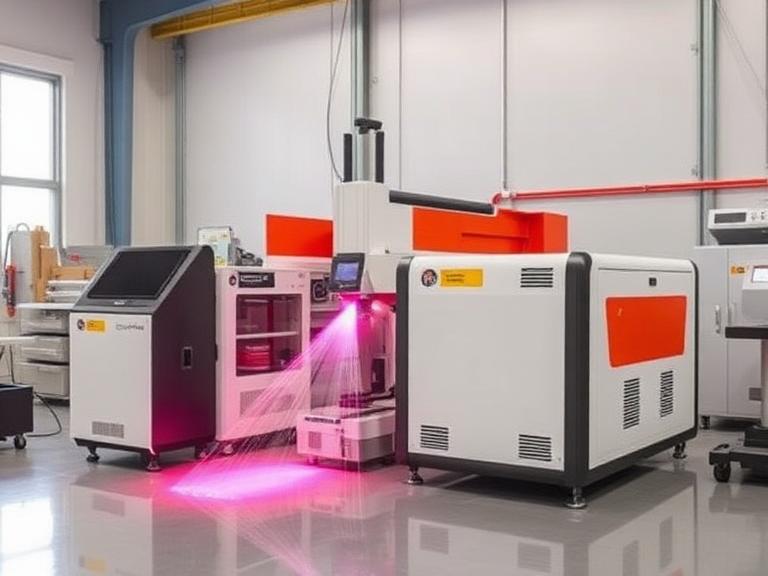
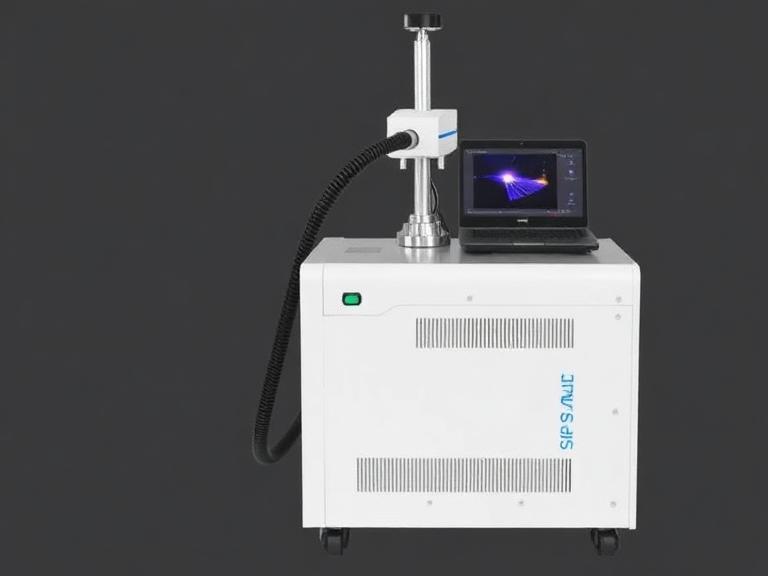
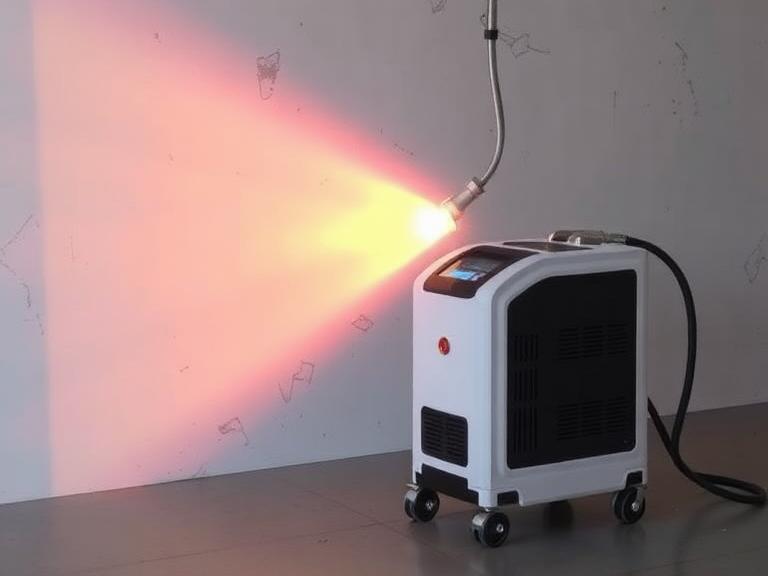
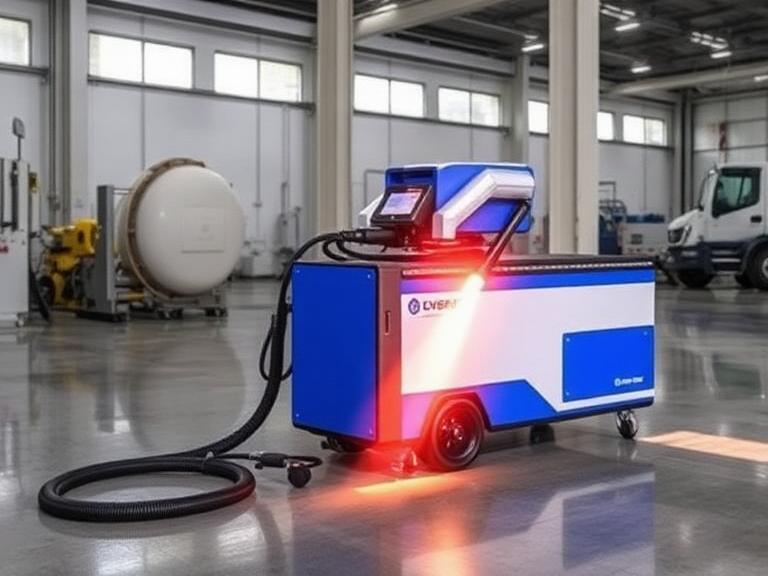
Where will the cleaning take place? If you operate a stationary manufacturing line, a large cabinet-style machine integrated into a robotic cell is ideal. However, if you provide contract cleaning services at shipyards, refineries, or construction sites, mobility is your primary concern. When you buy laser cleaning machine setups for field service, investigate the weight, wheel configuration, and ruggedness of the chassis. To see the latest advancements in compact designs, we suggest reviewing the top mobile laser cleaning machines 2026.
Tip 4: Scrutinize the Cooling System Configuration
Lasers generate significant thermal loads. The efficiency of the cooling system directly impacts the duty cycle of your equipment. Low-power pulsed systems (typically under 200W) can often utilize air cooling, making them lighter and easier to transport. High-power systems absolutely require robust water-cooling chillers. When you buy laser cleaning machine systems above 1000W, ensure the chiller uses dual-temperature control circuits—one for the laser source and one for the optical head—to prevent condensation on the lenses during humid operational conditions.
Tip 5: Calculate the Total Cost of Ownership
The upfront capital expenditure to buy laser cleaning machine equipment is only one part of the financial equation. Unlike abrasive blasting, lasers do not require consumable media like sand or dry ice, and they do not generate secondary waste that requires hazardous disposal. The primary operational cost is electricity and occasional replacement of protective lenses. When evaluating initial hardware costs, especially in specific regional markets, researching guides like the small laser cleaning machine price Australia can help you benchmark global pricing standards against domestic direct-from-manufacturer pricing.
Tip 6: Analyze the Scanning Head and Optics
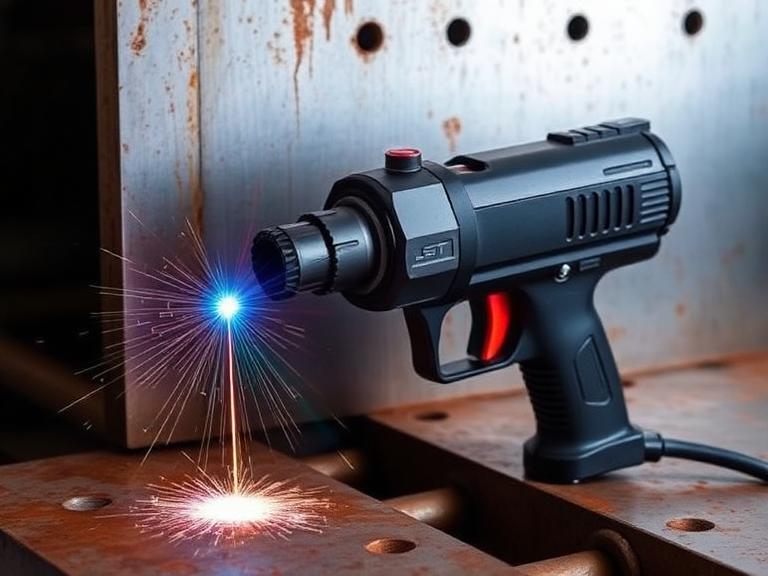
The scanning head (the physical gun the operator holds) dictates the beam delivery. It utilizes internal oscillating mirrors (galvanometers) to sweep the laser beam across the surface. When you buy laser cleaning machine equipment, verify the scanning width capabilities. A high-quality scanner will offer adjustable widths from 10mm up to 300mm. Furthermore, we recommend selecting ergonomic, lightweight cleaning heads (under 1.5 kg) to reduce operator fatigue during eight-hour shifts.
Tip 7: Consider the Specific Substrate Material
Laser ablation relies on the differing absorption rates between the contaminant and the substrate. A wavelength of 1064nm (standard for fiber lasers) is highly absorbed by rust and paint but reflects off bare aluminum and steel, stopping the cleaning process precisely at the base metal. However, if your substrate is highly reflective (like polished copper or brass), you must ensure the laser source has specific anti-reflection protection isolators built-in; otherwise, the back-reflected light will destroy the laser oscillator. We recommend consulting directly with our engineering team to run sample tests on your specific materials before you buy laser cleaning machine systems.
Tip 8: Verify Control Software Capabilities
The user interface is the brain of your operation. Modern laser cleaners should feature intuitive touchscreen interfaces that allow operators to save specific parameter profiles. If you clean engine blocks on Monday and delicate baking trays on Tuesday, the ability to instantly recall the exact pulse frequency, scanning speed, and wattage profile prevents operator error. Avoid machines with locked, proprietary software that prohibits parameter fine-tuning.
Tip 9: Assess ROI and Operational Profitability
For service contractors, the decision to buy laser cleaning machine technology is driven by rapid ROI. The speed of a laser cleaner directly translates to billable square footage. While a 100W machine might be cheaper, a 1000W machine will complete the job ten times faster, drastically increasing your profit margin per hour. To accurately quote jobs and forecast your return on investment, we highly recommend utilizing our breakdown on 激光清洗服务每平方英尺成本.
Tip 10: Demand Direct Manufacturer Support
The industrial laser market is saturated with trading companies that rebrand equipment without understanding the underlying photonic engineering. When you buy laser cleaning machine systems, purchase directly from a primary manufacturer like Super Fast Laser Technology Co.,Ltd. We maintain our own R&D facility, meaning we control the source code, the optical alignment, and the component integration. This guarantees that if you encounter a highly specific industrial challenge, you receive direct engineering support rather than delayed responses from a middleman.
常见问题(FAQ)
What protective equipment is required to operate a laser cleaning machine?
Laser cleaners are Class 4 laser devices. The operator and anyone in the immediate vicinity must wear laser safety glasses rated specifically for the 1064nm wavelength (Optical Density OD6+ is standard). Additionally, a fume extraction system is required to capture the vaporized paint, rust, or oils to prevent inhalation of hazardous particulates.
Can I buy laser cleaning machine technology to clean plastic or fiberglass?
Generally, standard 1064nm fiber lasers are not ideal for organic substrates like plastic or fiberglass, as the laser energy may melt or burn the base material before ablating the contaminant. Ultraviolet (UV) lasers or highly specific ultra-short pulse lasers are required for these delicate substrates. We recommend consulting our engineers for non-metallic applications.
Does laser cleaning alter the surface texture of the metal?
When properly calibrated, a pulsed laser will not alter the surface texture, melt the metal, or create micro-cracking. It is a non-abrasive, non-kinetic process. This makes it vastly superior to sandblasting, which physically erodes the substrate and alters dimensional tolerances.
How long is the lifespan of a fiber laser source?
High-quality fiber laser sources used in industrial cleaning machines boast an operational lifespan of up to 100,000 hours (Mean Time Between Failures). With proper maintenance of the external optics and cooling chiller, the machine will provide over a decade of reliable service.
行业参考
To ensure the highest standards of industrial safety and technological accuracy, the principles discussed in this guide align with global photonic and manufacturing standards. We encourage facility managers to review the following authoritative resources: