- Ziva@CKlasersz.com
- WeChat:86-13138536413
- 400-168-9906
- 0755 27084852

激光清洗机有哪些维护要求?

激光清洗机有哪些维护要求?
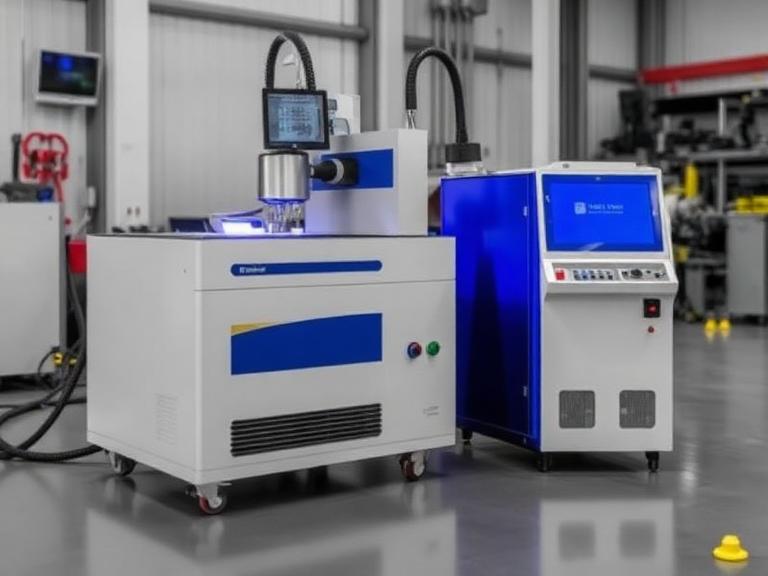
The transition from traditional abrasive blasting and chemical cleaning to advanced optical surface preparation has revolutionized industrial manufacturing. As production facilities integrate these modern systems to remove rust, paint, oxides, and contaminants, understanding the maintenance requirements for 激光清洗机 becomes paramount. A well-maintained system guarantees consistent beam quality, operational safety, and an extended equipment lifespan, ultimately protecting your capital investment.

超快激光技术有限公司., headquartered in Shenzhen, is currently the first domestic manufacturer who focuses on the R&D, production, and sales of laser cleaning machines. It has its own R&D team and production factory, placing it in a leading position in the laser cleaning field. The company focuses on high-tech laser application fields, with the primary purpose of pursuing product specialization, providing professional laser cleaning, automatic equipment, software, and a full set of laser cleaning solutions. From our experience designing and deploying these systems globally, neglecting routine care is the primary cause of premature component failure and degraded cleaning performance.
In this comprehensive guide, we will detail the exact maintenance requirements for laser cleaning machines. We will explore daily, weekly, monthly, and annual service protocols. Whether you operate a portable unit or a fully integrated robotic cell, adhering to these expert guidelines will ensure your equipment operates at peak efficiency.
目录
- 1. Summary Table: Core Maintenance Requirements
- 2. Why Maintenance Requirements for Laser Cleaning Machines Matter
- 3. Daily Maintenance Requirements for Laser Cleaning Machines
- 4. Weekly and Monthly Upkeep Protocols
- 5. Annual Servicing and Advanced Component Care
- 6. The Super Fast Laser Advantage
- 7.常见问题
- 8.行业参考
1. Summary Table: Core Maintenance Requirements
To provide immediate clarity for facility managers and operators, we have compiled a summary table outlining the fundamental maintenance requirements for laser cleaning machines. This serves as a quick-reference checklist to integrate into your standard operating procedures.
| Frequency | Component | Action Required | Importance Level |
|---|---|---|---|
| Daily | Protective Lens | Inspect for dust, spatter, or burn marks. Clean with absolute ethanol. | Critical |
| Daily | Fiber Cable & Gun | Check for severe bends, twists, or physical damage. | 高 |
| Weekly | Cooling System (Chiller) | Check water levels and inspect for leaks. Clean dust filters. | 高 |
| Monthly | Cooling System (Chiller) | Drain and replace distilled or deionized water to prevent algae/scale. | Critical |
| Quarterly | Galvanometer Mirrors | Professional inspection for coating degradation or micro-scratches. | 中度 |
| Annually | Laser Source & Power | Comprehensive diagnostic check, optical alignment verification, software updates. | 高 |
2. Why Maintenance Requirements for Laser Cleaning Machines Matter
Understanding the maintenance requirements for laser cleaning machines begins with understanding how the technology operates. These systems generate high-intensity optical energy that is transmitted through delicate fiber optic cables and focused through precision lenses. When a high-energy laser beam interacts with a contaminated surface, it vaporizes the unwanted material. This sublimation process inevitably creates localized smoke, airborne particulates, and thermal back-reflection.
If these airborne particulates settle on the optical components, the laser beam will heat the dirt instead of passing through the lens. This causes the lens to crack, shatter, or melt, which can subsequently damage the expensive galvanometer mirrors inside the cleaning head. From our experience, 80 percent of all service calls related to power loss or poor cleaning quality stem directly from operators failing to follow the basic maintenance requirements for laser cleaning machines regarding lens hygiene and cooling system management.
3. Daily Maintenance Requirements for Laser Cleaning Machines
The daily maintenance requirements for laser cleaning machines are entirely focused on the external components that interface directly with the operational environment. These tasks should be performed by the operator before striking the first arc of the shift.
Optical Lens Inspection and Cleaning
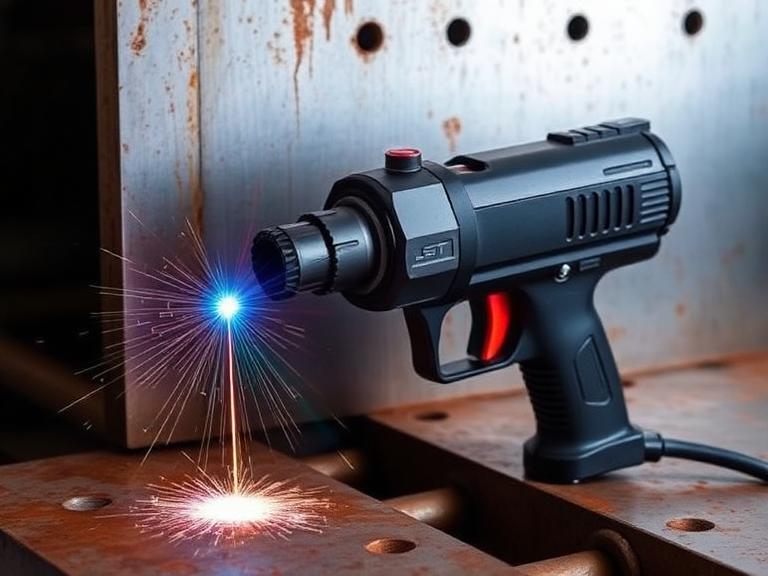
The protective lens sits at the very front of the laser gun, acting as a physical barrier between the vaporized debris and the internal focusing optics. Inspecting this lens is the most critical of all maintenance requirements for laser cleaning machines. Remove the lens cartridge in a clean, dust-free environment. Hold the lens by its edges to prevent transferring oils from your skin. If you observe dust or smudges, use a specialized lint-free optical swab moistened with absolute analytical-grade ethanol or isopropanol. Gently wipe the lens in a single direction. Never use a circular motion, as this can drag microscopic abrasive particles across the anti-reflective coating.
Handheld Gun and Cable Checks

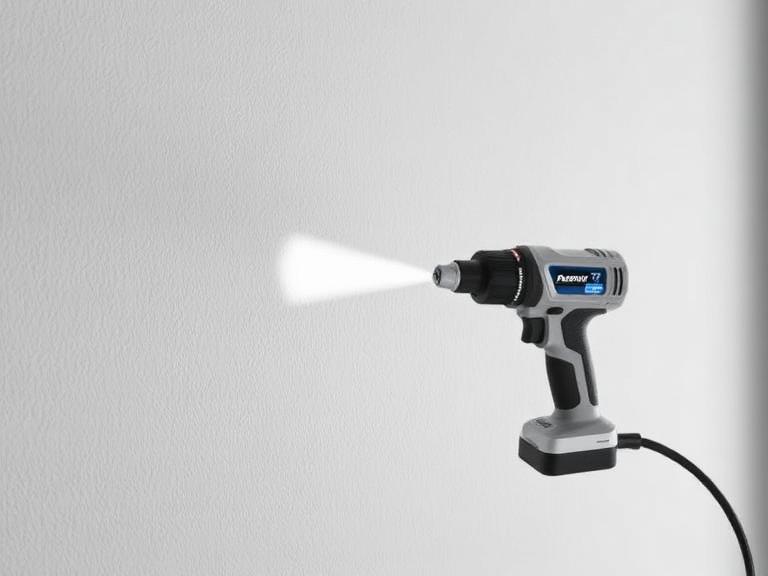
When operating a 手持式激光清洗机, the fiber optic delivery cable is subjected to constant movement. Inside this protective armored casing is a delicate glass fiber. We recommend inspecting the entire length of the cable daily. Ensure there are no tight kinks, heavy objects resting on the cable, or sharp bends that exceed the manufacturer’s minimum bend radius. Twisting the cable forcefully can cause the internal glass core to fracture, resulting in catastrophic laser leakage inside the jacket. Additionally, ensure the trigger mechanism on the handheld gun is free of debris and actuates smoothly.
4. Weekly and Monthly Upkeep Protocols
As we move beyond daily checks, the maintenance requirements for laser cleaning machines shift toward thermal management and automated mechanics. Lasers generate significant heat, and managing this thermal load is non-negotiable.
Chiller and Cooling System Upkeep
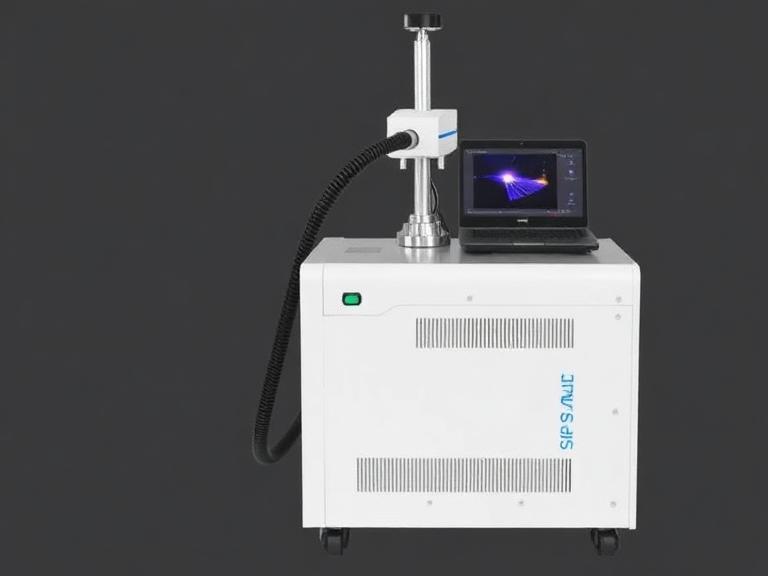
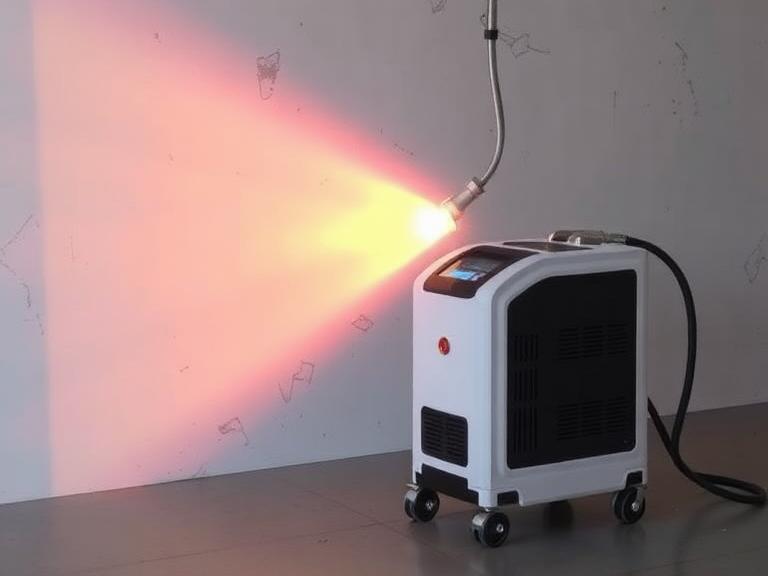
High-power laser cleaners rely on integrated water chillers to maintain stable operating temperatures for both the laser source and the cleaning head. Weekly maintenance requirements for laser cleaning machines dictate that operators check the chiller’s water level gauge. Furthermore, the side and rear dust filters on the chiller unit must be removed and blown clean with compressed air. Blocked air flow causes the compressor to overheat, triggering system safety shutdowns.
Monthly, the cooling water must be completely drained and replaced. We strictly recommend using only purified distilled water or deionized water. Tap water contains minerals that will calcify inside the cooling channels of the laser generator, leading to irreversible thermal damage. In winter conditions, appropriate laser-grade antifreeze must be added to prevent expansion cracking.
Automation and Axis Calibration

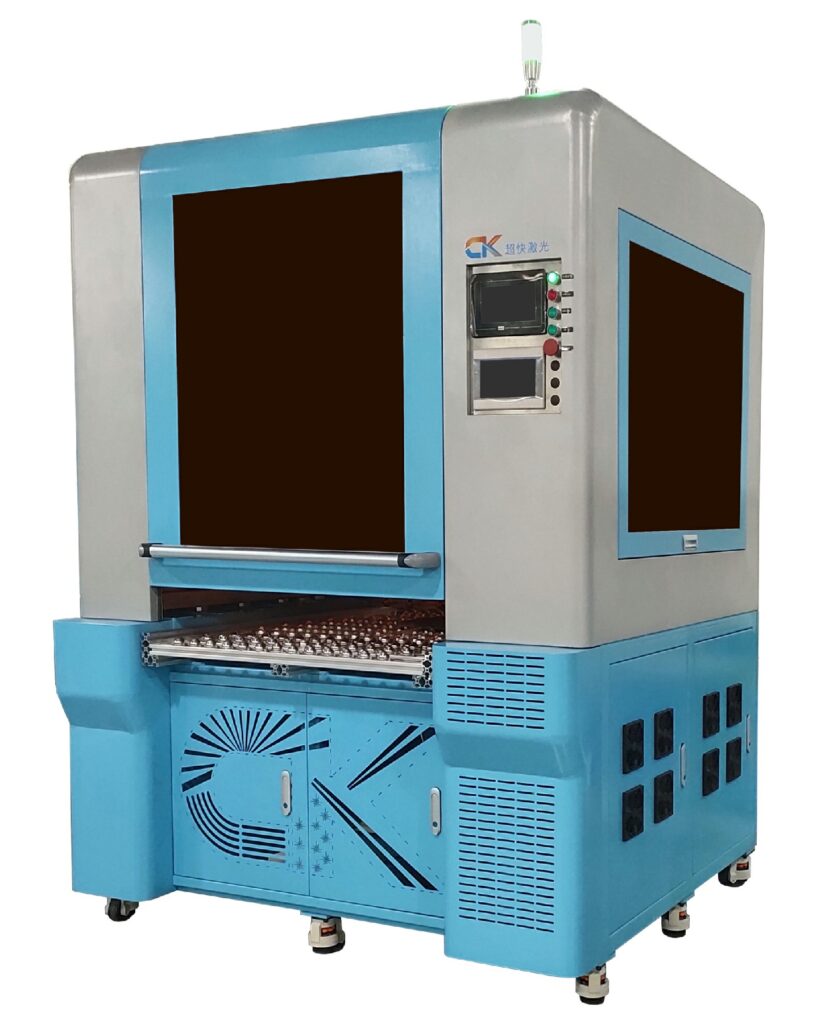
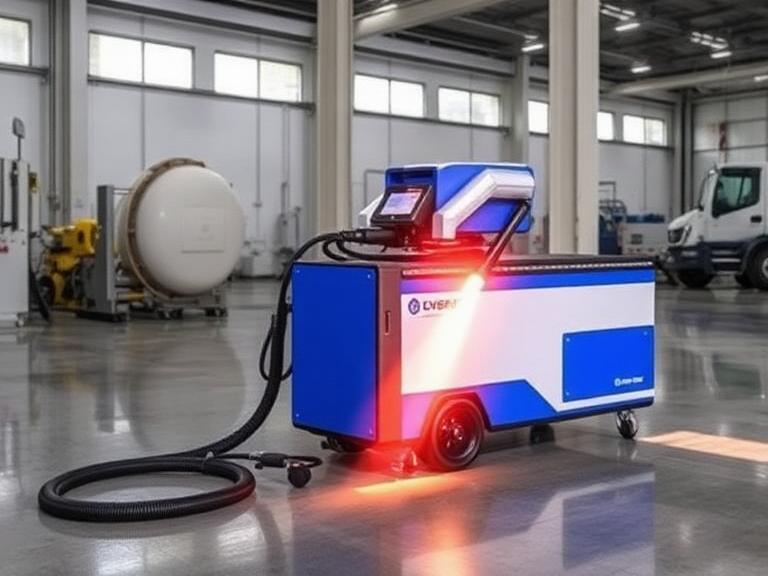
For industrial facilities utilizing a 6 轴自动模具激光清洗机, mechanical upkeep is added to the maintenance requirements for laser cleaning machines. Robotic arms and automated gantries operate in environments filled with the very rust and oxides the laser is removing. Monthly, operators must clean the linear guide rails and apply fresh industrial lubricant to the ball screws. The servo motor feedback cables should be inspected for abrasion, and the focal distance sensors must be wiped clean to ensure the automated system maintains the exact focal length required for optimal energy density.
5. Annual Servicing and Advanced Component Care
Annual maintenance requirements for laser cleaning machines often involve deep diagnostics that ensure the system continues to operate within its original factory specifications. These procedures secure the long-term viability of the equipment.
Laser Source and Fiber Optic Integrity
The core laser generator is a sealed unit, but its output must be validated annually. From our experience, we recommend scheduling a technician to perform a power output test using a calibrated laser power meter. If the output has degraded, it may indicate aging pump diodes or internal fiber splices that require factory recalibration. Furthermore, the galvanometer scanners (the oscillating mirrors that create the line or pattern of the laser) must be professionally inspected. If the specialized coating on these mirrors degrades, the cleaning pattern will become uneven, leaving streaks on the target material.
Custom and Heavy-Duty Systems
Facilities employing an 自动变速器刹车片 激光清洁设备 line operate under punishing, continuous duty cycles. In these high-volume automotive applications, the annual maintenance requirements for laser cleaning machines extend to the exhaust and fume extraction systems. The extraction ducting must be professionally cleaned to remove combustible metal dust buildup, ensuring fire safety. Because we excel in delivering an 自动定制解决方案, our engineering team provides bespoke annual maintenance schedules tailored to the exact payload and cycle times of your custom integration.
6. The Super Fast Laser Advantage in Maintenance
Navigating the maintenance requirements for laser cleaning machines is vastly simplified when you partner with a manufacturer that controls the entire technology stack. Because Super Fast Laser Technology Co.,Ltd. has its own R&D team and production factory, we engineer our systems specifically to minimize maintenance downtime. Our equipment features modular protective lens cartridges, intelligent chiller alarm integration, and intuitive software that alerts operators when routine maintenance milestones are reached.
By pursuing product specialization and providing a full set of laser cleaning solutions, we ensure that our global clientele receives rigorous operational training. We equip your facility managers with the knowledge and the specialized tools required to fulfill all maintenance requirements for laser cleaning machines safely and efficiently, ensuring your production lines never experience unexpected laser-related halts.
7.常见问题
What is the most common reason a laser cleaning machine loses power?
From our experience, sudden power loss is almost exclusively caused by a dirty or burned protective lens. If operators ignore the daily maintenance requirements for laser cleaning machines and fail to clean the lens, the laser energy is blocked and absorbed by the dirt, drastically reducing the cleaning effectiveness on the workpiece.
“`
Can I use tap water in the laser chiller unit?
No. We strongly advise against using tap water, mineral water, or standard filtered water. Tap water contains trace minerals and ions that will cause scaling and electrical conductivity issues within the laser source. Fulfilling the maintenance requirements for laser cleaning machines strictly dictates the use of distilled or deionized water.
How often should the protective lens be replaced?
The lifespan of a protective lens depends on the cleaning application and operator diligence. If you are cleaning heavy rust and creating significant spatter, and you follow the daily cleaning maintenance requirements for laser cleaning machines, a lens may last one to two weeks. It must be replaced immediately if pitting, melting, or permanent cloudy spots are observed.
Do automated laser systems require different maintenance than handheld units?
Yes. While the optical and cooling maintenance requirements for laser cleaning machines remain the same, automated systems like our 6 Axis automatic Mold Laser Cleaning Machine also require mechanical maintenance. This includes lubricating robotic joints, checking linear actuators, and verifying the calibration of automated safety enclosures.
“`
8.行业参考
1. International Journal of Advanced Manufacturing Technology. “Preventative Maintenance Protocols for High-Power Fiber Lasers in Industrial Surface Preparation.” 2025.
2. The Laser Institute of America (LIA). “Operational Safety and Maintenance Standards for Class 4 Industrial Laser Systems.”
3. Super Fast Laser Technology Co.,Ltd. Internal Engineering Division. “Lifecycle Optimization: Adhering to the Maintenance Requirements for Laser Cleaning Machines.” 2026 Technical Whitepaper.