- Ziva@CKlasersz.com
- WeChat:86-13138536413
- 400-168-9906
- 0755 27084852






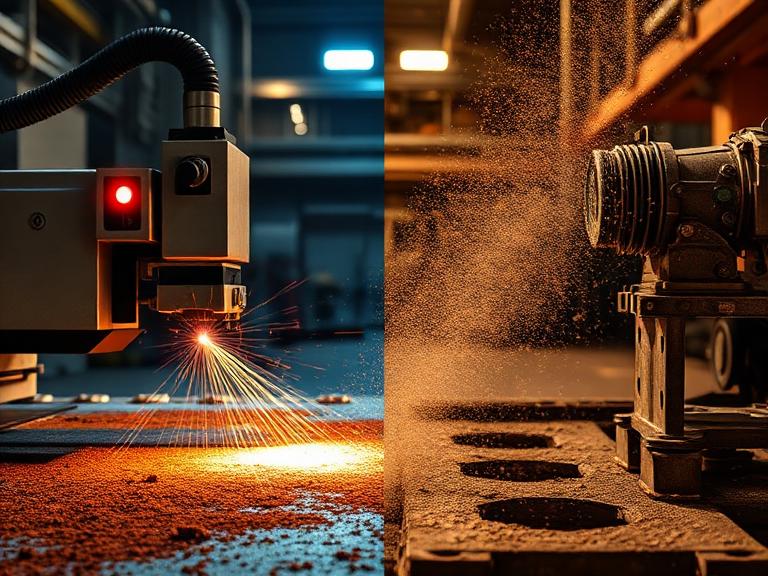
In the industrial surface preparation sector, time directly dictates profitability. Asset owners, facility managers, and independent contractors constantly seek methodologies that minimize operational downtime while maximizing output quality. Shenzhen Super Fast Laser Technology Co.,Ltd., headquartered in Shenzhen, is currently the first domestic manufacturer who focuses on the R&D, production, and sales of laser cleaning machines. It has its own R&D team and production factory, it is in a leading position in the laser cleaning field. As pioneers in this technology, we regularly consult with heavy industry clients looking to compare the speed of laser rust removal to traditional methods like sandblasting, chemical etching, and mechanical grinding.
When assessing overall operational speed, examining only the active stripping rate is a fundamental engineering error. True throughput must encompass setup protocols, containment requirements, the active cleaning phase, and post-processing cleanup. From our experience, comparing laser rust removal to traditional methods reveals a massive paradigm shift in how project timelines are calculated. In this authoritative guide, we dissect the quantitative and qualitative speed metrics of modern laser ablation versus historical abrasive techniques.
Table of Contents
- 1. Understanding the Mechanisms of Surface Cleaning
- 2. Setup and Containment: The Hidden Time Sinks
- 3. Active Speed: Comparing Laser Rust Removal to Traditional Methods
- 4. Post-Processing: Cleanup and Waste Management
- 5. Business Velocity: How Speed Impacts Profitability
- 6. Selecting the Right Equipment for Maximum Speed
- 7. Summary Table: Time Breakdown by Methodology
- 8. Frequently Asked Questions (FAQs)
- 9. Industry and Government References
1. Understanding the Mechanisms of Surface Cleaning
To accurately compare speeds, one must understand the underlying physics of each process. Traditional sandblasting relies on kinetic energy. A high-pressure air stream propels abrasive media (such as silica sand, aluminum oxide, or crushed glass) against a substrate, physically shattering and tearing away the rust layer. While effective, this brute-force approach requires constant media replenishment and poses severe damage risks to the underlying substrate if the operator slows down.
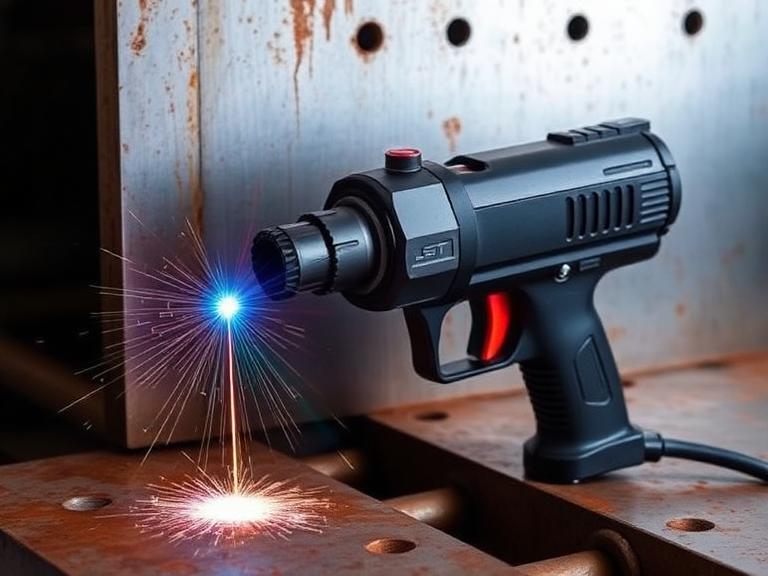
Conversely, laser cleaning operates through a process known as photothermal ablation. A focused beam of concentrated light pulses at high frequencies. When this energy hits the oxidized layer (rust), the rust absorbs the energy, instantly turning into plasma and vaporizing. The underlying metal, which reflects the specific wavelength of the laser, remains completely untouched. We recommend understanding this distinction because the lack of mechanical impact in laser cleaning fundamentally alters the speed requirements for masking and substrate protection.
2. Setup and Containment: The Hidden Time Sinks
When project managers compare laser rust removal to traditional methods, they frequently overlook the preparation phase. Sandblasting is an inherently messy and hazardous operation. Before a single nozzle is engaged, operators must construct elaborate containment enclosures to prevent abrasive media from contaminating surrounding machinery or the environment. Masking delicate components, such as bearings, hydraulic lines, and sensors, can take hours or even days. Furthermore, heavy personal protective equipment (PPE), including positive pressure air helmets, must be donned.
From our experience, the setup time for laser cleaning is virtually non-existent. Because laser ablation generates no secondary waste and does not rely on scattered kinetic media, there is zero need for environmental containment or extensive masking. The operator simply needs standard safety glasses suited for the laser’s wavelength, a basic fume extractor, and a power source. When comparing laser rust removal to traditional methods, the hours saved during the setup phase often allow laser operators to complete an entire project before a sandblasting crew has even finished erecting their containment tents.
3. Active Speed: Comparing Laser Rust Removal to Traditional Methods
Active speed refers to the square meter per hour (m²/h) clearance rate. Sandblasting typically boasts a very high active clearance rate on large, flat, uniform surfaces like ship hulls or massive storage tanks. An industrial blast pot can clear rust rapidly, occasionally outpacing lower-wattage laser systems purely in raw surface area per minute.
However, the narrative changes entirely when dealing with complex geometries, delicate substrates, or environments requiring precision. When evaluating active processing, comparing laser rust removal to traditional methods highlights the laser’s superiority in precision environments. An operator using one of our high-power continuous wave (CW) or pulsed laser systems can rapidly strip rust from intricate gears, engine blocks, and aviation components without pausing to check for substrate pitting or profile damage.
Furthermore, traditional sandblasting requires frequent stops to refill media hoppers, clear blockages, and adjust compressor pressures. Laser cleaners operate continuously. We recommend factoring in these operational interruptions. Over a standard eight-hour shift, the continuous operational uptime of a laser machine heavily offsets the peak burst speed of abrasive blasting.
4. Post-Processing: Cleanup and Waste Management
The most drastic divergence in project timelines occurs during the cleanup phase. Sandblasting generates tons of secondary waste. For every square meter of rust removed, kilos of contaminated abrasive media are left behind. This waste must be swept, vacuumed, transported, and disposed of according to strict environmental regulations, which consumes massive amounts of labor hours and logistics coordination.
When contrasting laser rust removal to traditional methods in terms of post-processing, the laser provides unparalleled speed. The photothermal ablation process turns the iron oxide into a fine vapor and particulate matter, which is immediately captured by a localized fume extractor. There is no media to sweep up, no contaminated water to drain, and no hazardous waste hauling required. The surface is left dry, perfectly clean, and immediately ready for welding, painting, or coating. From our experience, this zero-cleanup advantage cuts total project time by up to 60% compared to abrasive blasting.
Expert Viewpoint: In industrial maintenance, downtime is the most expensive metric. While a sandblaster might strip a specific patch of rust 10% faster, the requirement to shut down surrounding assembly lines to prevent dust contamination negates that speed. Laser cleaning allows for in-situ maintenance. You can clean a robotic arm right on the factory floor while adjacent operations continue unimpeded.
5. Business Velocity: How Speed Impacts Profitability
In the surface preparation industry, operational speed translates directly to financial velocity. Because a laser technician can arrive on-site, plug in the machine, complete the job, and leave without spending hours on cleanup, they can service three to four clients in the time it takes a sandblasting crew to service one.
This rapid turnaround is a core factor when analyzing laser rust removal business profitability. The elimination of abrasive media costs, disposal fees, and extended labor hours dramatically increases the profit margin per job. For entrepreneurs evaluating the market, understanding whether is laser cleaning business profitable relies heavily on this speed-to-margin ratio. We recommend adopting high-power laser technology to drastically outpace competitors still relying on archaic, slow-to-deploy abrasive methods.
6. Selecting the Right Equipment for Maximum Speed
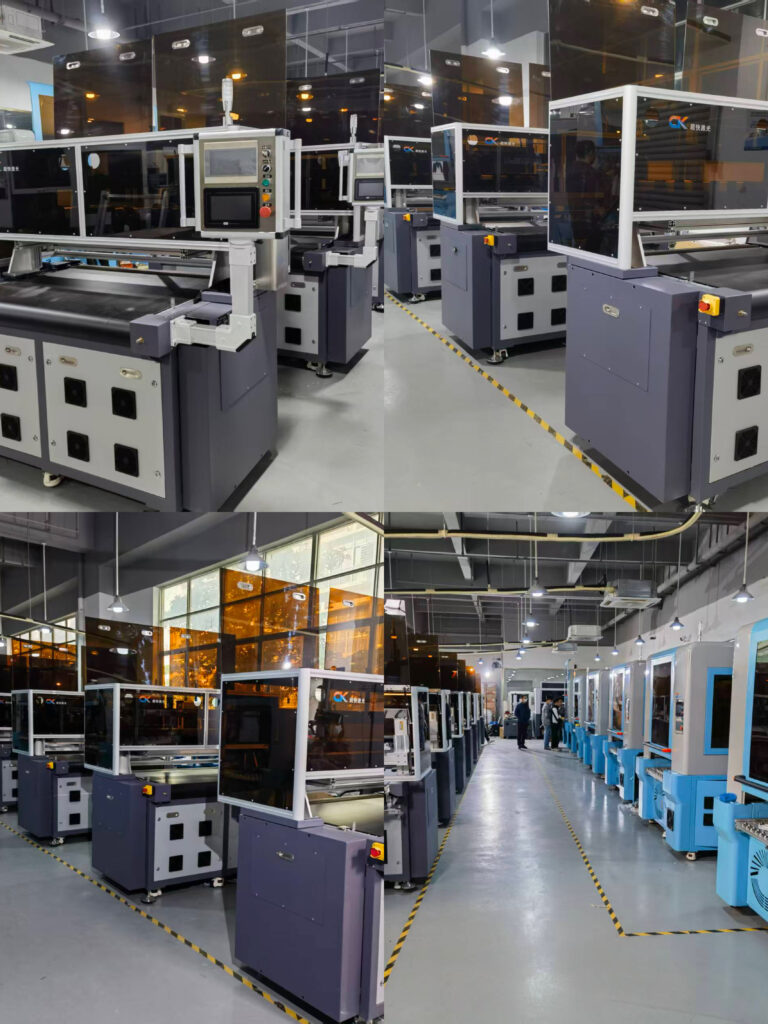
To fully leverage the speed advantages of laser technology, contractors must utilize state-of-the-art equipment. Utilizing an underpowered 50W laser on a heavy marine vessel will result in a poor comparison. For large-scale industrial rust removal, operators require robust, high-wattage systems.
From our experience in R&D and manufacturing, mobility is key to speed. We recommend reviewing the best portable laser cleaners 2026 to ensure your teams can move swiftly across large job sites without being tethered to massive compressor units. Additionally, the ergonomics of the laser head dictate how fast an operator can work without fatigue. Selecting from the top handheld laser cleaners 2026 ensures that technicians maintain high active cleaning speeds throughout an entire shift.
Finally, partnering with elite laser cleaning machine manufacturers like Super Fast Laser guarantees access to advanced optics and reliable cooling systems, preventing thermal shutdowns and ensuring maximum operational velocity.
7. Summary Table: Time Breakdown by Methodology
To provide a clear visual comparison of overall project speed, we have compiled a summary table detailing the time investments required for a standard 10-square-meter industrial rust removal project.
| Operational Phase | Laser Rust Removal | Abrasive Sandblasting | Chemical Stripping | Mechanical Grinding |
|---|---|---|---|---|
| Setup & Containment | 10 – 15 Minutes | 2 – 4 Hours | 30 – 45 Minutes | 15 – 30 Minutes |
| Masking Requirements | Minimal to None | Extensive (Heavy Taping) | Extensive (Chemical Barriers) | Moderate |
| Active Cleaning Speed | Fast (Continuous operation) | Very Fast (Requires media refills) | Slow (Dwell time required) | Slow (Labor intensive) |
| Cleanup & Disposal | None (Localized fume extraction) | 2 – 4 Hours (Heavy labor) | 1 – 2 Hours (Hazardous waste) | 1 Hour (Dust sweeping) |
| Total Project Time | Approx. 2 Hours | Approx. 6 – 8 Hours | Approx. 5 – 7 Hours | Approx. 4 – 6 Hours |
8. Frequently Asked Questions (FAQs)
Is comparing laser rust removal to traditional methods accurate for all types of rust?
Yes, though the active speed varies. Light surface oxidation is instantly vaporized by a laser, making it vastly faster than sandblasting. For extreme, heavily scaled marine rust, a high-power laser (1000W+) is required to match the raw kinetic stripping speed of a sandblaster. However, when factoring in the zero-cleanup time, the laser remains faster overall.
Does laser cleaning damage the base metal to speed up the process?
No. This is a primary advantage when comparing laser rust removal to traditional methods. Sandblasting removes substrate material to achieve a white-metal finish, requiring careful, slower operation on thin metals. Lasers reflect off the clean substrate, meaning the operator can work rapidly without fear of altering the metal’s dimensional tolerances.
Why is setup time so much faster with laser cleaning?
Traditional methods require isolating the environment to control airborne silica dust and rebounding abrasives. Because lasers turn rust into vapor that is immediately captured by an integrated vacuum filtration system, there is no physical debris field to contain. This allows technicians to bypass the construction of containment tents entirely.
Can laser cleaners work as fast as sandblasters on large flat surfaces?
On massive, uniform surfaces like storage tanks, a multi-nozzle sandblasting rig will have a higher active stripping rate. However, modern high-power continuous wave lasers with wide scanning optics are rapidly closing this gap. We recommend evaluating the total project timeline, including abrasive media logistics and cleanup, where the laser will ultimately complete the job faster.
9. Industry and Government References
- Occupational Safety and Health Administration (OSHA) – Crystalline Silica Exposure Guidelines
- Environmental Protection Agency (EPA) – Hazardous Waste Management Guidelines for Abrasive Blasting
- American Welding Society (AWS) – Surface Preparation Standards for Welding Operations
In conclusion, when evaluating modern surface preparation, focusing solely on the trigger-time of an abrasive nozzle provides a dangerously incomplete picture. By eliminating containment construction, mitigating hazardous waste logistics, and operating with continuous precision, laser technology offers an undisputed advantage in overall project velocity. As the premier manufacturer of these advanced systems, Shenzhen Super Fast Laser Technology Co.,Ltd. provides the tools necessary to modernize your operations and vastly improve your profit margins through unprecedented speed.