- Ziva@CKlasersz.com
- WeChat:86-13138536413
- 400-168-9906
- 0755 27084852






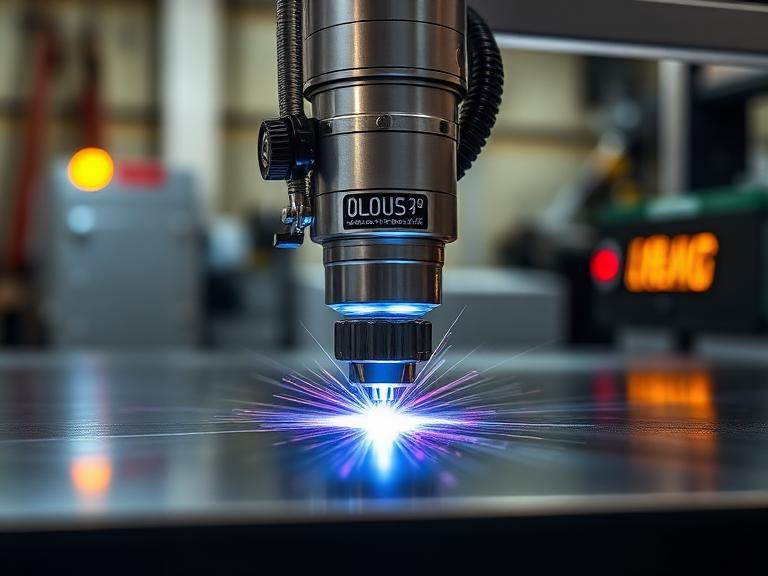
In the rapidly advancing world of industrial surface preparation, laser ablation technology has emerged as the most efficient, eco-friendly, and precise method for rust removal, paint stripping, and material cleaning. As heavy industries, automotive restorers, and aerospace manufacturers transition away from traditional sandblasting and chemical solvents, a critical question consistently arises during the procurement process: How long do laser cleaners last?
At Super Fast Laser, headquartered in Shenzhen, we understand the financial and operational weight of this question. We are currently the first domestic manufacturer who focuses strictly on the research, development, production, and sales of laser cleaning machines. Backed by our dedicated R&D team and independent production factory, we hold a leading position in the laser cleaning field. From our experience designing, testing, and deploying these high-tech systems globally, we know that understanding the lifespan of your equipment is the foundation of a sound return on investment. The inquiry of how long do laser cleaners last is not answered with a single number, but rather by examining the complex interplay between the solid-state laser source, optical components, thermal management systems, and daily operational habits.
In this comprehensive, authoritative guide, we will dissect the mechanical and optical lifespans of these machines. We will explore the durability of fiber laser generators, the maintenance of protective lenses, and how proper operational environments dictate exactly how long do laser cleaners last in real-world, heavy-duty applications.
Table of Contents
- 1. The Core Lifespan: How Long Do Laser Cleaners Last Structurally?
- 2. Fiber Optics and Laser Types: CW vs. Pulsed
- 3. Key Factors Influencing Equipment Longevity
- 4. Summary Table: Expected Lifespans of Key Components
- 5. From Our Experience: Maximizing Your Machine’s Lifespan
- 6. Profitability and Longevity: A Business Perspective
- 7. Choosing the Right Manufacturer for Equipment Longevity
- 8. Frequently Asked Questions (FAQs)
- 9. References and Industry Standards
1. The Core Lifespan: How Long Do Laser Cleaners Last Structurally?
When clients ask us how long do laser cleaners last, they are primarily inquiring about the “heart” of the machine: the laser generator. Modern industrial laser cleaners overwhelmingly utilize fiber laser technology. Unlike older gas (CO2) or crystal (Nd:YAG) lasers that required frequent alignment, gas refills, and flashlamp replacements, solid-state fiber lasers represent a monumental leap in durability.
The industry standard Mean Time Between Failures (MTBF) for a high-quality fiber laser source is approximately 100,000 operational hours. To put this into perspective, if you operate the machine for 8 hours a day, 5 days a week, and 50 weeks a year, you are running it for 2,000 hours annually. At this rate, the laser source itself is engineered to last for up to 50 years before experiencing a catastrophic degradation in power output. Therefore, when evaluating how long do laser cleaners last, the core light-generating diode modules are rarely the limiting factor in the machine’s overall lifecycle.
2. Fiber Optics and Laser Types: CW vs. Pulsed
It is crucial to differentiate between the types of laser sources, as this affects component stress and maintenance schedules. Continuous Wave (CW) lasers deliver a constant stream of energy, typically used for thick rust and heavy scale. Pulsed lasers deliver short, high-energy bursts, ideal for delicate substrates like historical artifacts or aerospace aluminum.
Pulsed Laser Longevity
Pulsed laser systems utilize complex master oscillator power amplifier (MOPA) architectures or Q-switched designs. Because these systems handle massive peak power spikes, the internal optical isolators and diodes endure significant thermal cycling. Despite this stress, top-tier pulsed systems manufactured by industry leaders still achieve the remarkable 100,000-hour benchmark. We recommend pulsed systems for businesses prioritizing substrate preservation, as the lack of continuous thermal buildup protects both the underlying material and the laser delivery head.
Continuous Wave (CW) Laser Longevity
CW lasers are generally simpler in their internal architecture, which inherently reduces the number of potential failure points. However, because they emit energy continuously, the thermal load on the external cooling system (chiller) and the final focusing optics is much higher. If you are questioning how long do laser cleaners last in continuous, heavy-duty shipyard applications, the answer heavily depends on the rigorous maintenance of the water chiller unit that keeps the CW source at an optimal operating temperature.
3. Key Factors Influencing Equipment Longevity
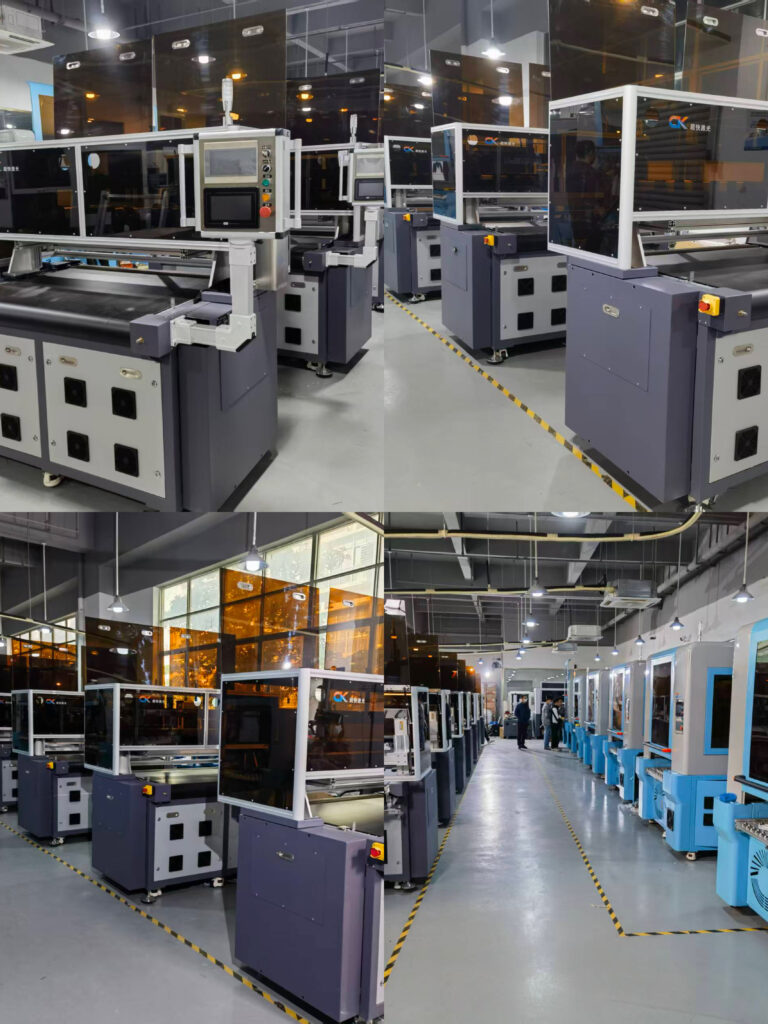
While the theoretical lifespan of a fiber laser source is immense, the practical lifespan of the entire unit—including the cooling system, laser gun, fiber optic cable, and control software—depends on several environmental and operational variables. If you want to maximize how long do laser cleaners last, you must control the following factors.
Operating Environment and Particulate Contamination
Laser cleaning inherently produces vaporized rust, paint, and airborne particulates. The most sensitive part of the laser cleaner is the optical output head (the laser gun), which houses the galvanometer mirrors and focusing lenses. If microscopic dust breaches the sealed optical cavity, the high-power laser beam will instantly burn the dust onto the lens surface. This causes thermal lensing, lens cracking, and backward reflection that can permanently destroy the main laser source. Operating the machine in conjunction with high-efficiency fume extractors drastically extends the life of the optical components.
Thermal Management and Chiller Maintenance
High-wattage laser cleaners (typically 1000W and above) require active water cooling. The lifespan of the laser source is inextricably linked to the performance of the industrial chiller. If the cooling water becomes contaminated with algae or mineral scaling, the cooling efficiency drops, leading to diode overheating. We recommend changing the distilled or deionized water in your chiller every three months and regularly cleaning the condenser dust filters.
Cable Integrity
The armored fiber optic delivery cable is the physical lifeline between the generator and the handheld gun. While protected by thick Kevlar and steel braiding, severe bending, crushing, or twisting beyond the manufacturer’s specified minimum bend radius will snap the internal quartz fiber. Once the fiber breaks, the entire cable—and often the laser source—must be replaced at a significant cost.
4. Summary Table: Expected Lifespans of Key Components
To provide a clear, practical breakdown of how long do laser cleaners last component by component, we have compiled the following summary table based on our extensive manufacturing and servicing data.
| Component | Expected Lifespan | Primary Cause of Failure | Maintenance Recommendation |
|---|---|---|---|
| Fiber Laser Generator (Source) | 100,000 Hours (~10-50 Years) | Overheating, back-reflection from highly reflective metals | Ensure chiller functions correctly; use isolators when cleaning aluminum/copper. |
| Protective Lens (Consumable) | 40 to 300 Hours | Spatters, dust accumulation, failure to use compressed air shield | Inspect daily; clean with anhydrous ethanol; replace immediately if pitted. |
| Focusing Lens / F-Theta Lens | 3 to 5 Years | Thermal cracking due to protective lens failure | Keep optical cavity sealed; never open in a dusty environment. |
| Galvanometer Motors (Scanner) | 5 to 7 Years | Bearing wear from high-frequency oscillation, physical drops | Avoid dropping the laser gun; do not operate at maximum scan speed constantly. |
| Water Chiller Unit | 7 to 10 Years | Compressor failure, water pump scaling, algae buildup | Use only pure deionized water; clean dust screens monthly; replace water quarterly. |
| Fiber Optic Cable | Life of the machine (if treated properly) | Extreme bending, crushing under heavy equipment | Respect the minimum bend radius (usually >200mm); use cable management booms. |
5. From Our Experience: Maximizing Your Machine’s Lifespan
Expert Insight from Super Fast Laser: From our experience, 90% of premature machine failures are completely preventable through basic operator training. When clients ask us how long do laser cleaners last, we reply that the machine will outlast the operator’s diligence. The most critical daily habit is checking the protective lens. A dirty protective lens absorbs laser energy, heats up, and shatters, sending debris into the expensive focusing optics.
Furthermore, we recommend always using a clean, dry compressed air or nitrogen gas shield during operation. This positive pressure blows ablated material away from the lens, extending the life of your consumables exponentially.
Proper parameter setting also plays a massive role. Operating a 2000W laser at 100% power for 10 hours a day will stress the system more than operating it at 80% power. By optimizing your pulse width, frequency, and scanning speed to match the specific contaminant, you reduce unnecessary thermal load on both the laser diode and the target substrate.
6. Profitability and Longevity: A Business Perspective
Understanding how long do laser cleaners last is fundamentally tied to business economics. Because the capital expenditure for a laser cleaning system is higher than purchasing a traditional sandblaster, longevity is the mechanism that drives return on investment (ROI). With a 100,000-hour lifespan on the core source and minimal consumable costs (electricity and cheap protective lenses), the operating cost of a laser cleaner is fractions of a penny per minute.
This immense durability is exactly why entering this industry is highly lucrative. If you are considering starting a service company, evaluating your laser rust removal business profitability requires factoring in this decade-long equipment depreciation cycle. Furthermore, many entrepreneurs who ask is laser cleaning business profitable are thrilled to discover that because the machines last so long without requiring abrasive media purchases, profit margins often exceed 70% per job after the machine is paid off.
7. Choosing the Right Manufacturer for Equipment Longevity
Not all machines are built to the same exacting standards. How long do laser cleaners last when purchased from a generic assembly plant using counterfeit parts? Usually, less than a year. The optical seals fail, the chillers leak, and the software glitches. This is why partnering with an original equipment manufacturer (OEM) with deep R&D roots is non-negotiable.
At Super Fast Laser, our rigorous quality control processes ensure that every unit leaving our Shenzhen facility is built to endure harsh industrial realities. Whether you are evaluating heavy-duty automated systems or looking for the best portable laser cleaners 2026, the internal component quality dictates the lifespan. The chassis must be dust-proof, the fiber coupling must be perfectly aligned, and the software must include thermal fail-safes.
When selecting portable units for field work, vibration resistance is key. We highly recommend reviewing our guide on the top handheld laser cleaners 2026 to understand how modern engineering protects fragile optics from accidental drops. To ensure your investment is protected, always vet your suppliers thoroughly by consulting resources like our comprehensive list of the premier laser cleaning machine manufacturers.
8. Frequently Asked Questions (FAQs)
Exactly how long do laser cleaners last before the laser source needs replacement?
High-quality fiber laser sources have an MTBF (Mean Time Between Failures) of approximately 100,000 hours. Under normal industrial usage (8 hours a day, 250 days a year), the laser generator can last up to 50 years. You will likely upgrade the machine for newer technology long before the laser diode degrades completely.
What is the most frequently replaced part on a laser cleaner?
The protective lens is the most frequently replaced consumable. Depending on the application, dust environment, and use of protective gas, a single lens can last anywhere from 40 hours to 300 hours. Fortunately, these lenses are highly affordable and take less than a minute to swap out.
How long do laser cleaners last if operated in highly dusty environments like shipyards?
The internal components of professional-grade laser cleaners are housed in sealed, IP-rated cabinets designed to isolate them from dust and moisture. As long as the external water chiller filters are cleaned regularly and the optical gun is never opened in the dusty environment, the machine will last just as long as it would in a cleanroom laboratory.
Does leaving the machine turned on affect its lifespan?
We recommend turning the machine off when not in active use for extended periods. While the solid-state laser is robust, leaving the system idling forces the water chiller and internal cooling fans to run continuously, unnecessarily wearing out the mechanical pumps and compressor components.
9. References and Industry Standards
To further understand the physics and safety protocols that dictate how long do laser cleaners last, we recommend consulting the following authoritative sources on laser technology and industrial safety:
- Occupational Safety and Health Administration (OSHA) – Laser Hazards and Workplace Safety
- National Institute of Standards and Technology (NIST) – Laser Power, Energy Measurements, and Diode Longevity
- Laser Institute of America (LIA) – Industry Standards for Laser Maintenance and Operation
In conclusion, the question of how long do laser cleaners last is answered by a combination of exceptional solid-state engineering and responsible operator maintenance. By investing in top-tier equipment from dedicated manufacturers like Super Fast Laser, and adhering to strict optical cleaning protocols, your laser cleaning system will serve as a highly profitable, reliable cornerstone of your business for decades to come.