- Ziva@CKlasersz.com
- WeChat:86-13138536413
- 400-168-9906
- 0755 27084852





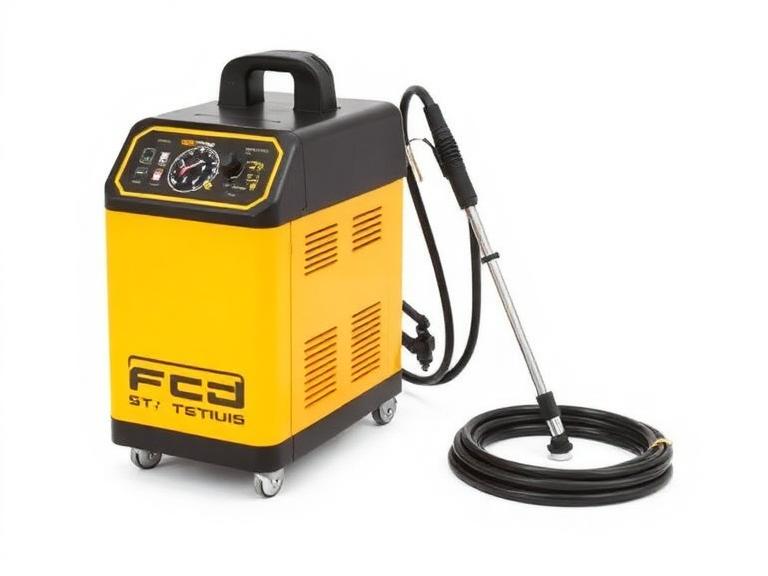
In the competitive world of industrial maintenance and manufacturing, the battle against oxidation is constant. Rust not only compromises the structural integrity of metal but also halts production lines and inflates maintenance costs. Traditional methods like sandblasting and chemical dipping are effective but often messy, hazardous, and abrasive to the base material. This is where the Best Laser-Reinigungsanlage for rust removal enters the equation.
Laser cleaning technology has evolved from a niche laboratory application to a robust industrial necessity. By utilizing high-energy laser pulses or continuous wave beams, these machines ablate rust, paint, and oil instantly, leaving the substrate untouched. This guide reviews the top 6 laser cleaning solutions available today, focusing on cutting-edge automation and heavy-duty capabilities.
Inhaltsübersicht
- 1. Why Choose Laser Technology for Rust Removal?
- 2. Top 6 Laser Cleaning Machines
- 2.1 AGV Online Automatic Cleaning Machine
- 2.2 6 Axis Automatic Mold Laser Cleaning Machine
- 2.3 High-Precision 100W Backpack Pulsed Laser
- 2.4 1500W CW Handheld Fiber Laser Cleaner
- 2.5 Enclosed Rotary Laser Cleaning Station
- 2.6 3000W High-Power Industrial Cart System
- 3. Buying Guide: Pulsed vs. Continuous Wave
- 4. Safety and Maintenance Protocols
- 5. Summary and Comparison
- 6. Frequently Asked Questions (FAQs)
- 7. References
1. Why Choose Laser Technology for Rust Removal?
Before diving into the specific models, it is crucial to understand the mechanism that makes this technology superior. Laser cleaning, or laser ablation, works by sending nanosecond-length pulses of light onto a surface. When these pulses hit contaminants like rust (iron oxide), the energy is absorbed, causing the rust to expand rapidly and vaporize or break away from the metal surface.
The primary advantage of using the Best laser cleaning machine for rust removal is selectivity. The underlying metal reflects the laser light and remains cool, ensuring no thermal damage or material loss. This is a game-changer for restoring delicate molds, cleaning high-value aerospace components, or preparing surfaces for welding without introducing foreign abrasives.
2. Top 6 Laser Cleaning Machines
Our selection criteria for this year focus on reliability, automation capabilities, power efficiency, and versatility. Leading the pack are two advanced automated solutions designed for modern smart factories.
2.1 AGV Online Automatic Cleaning Machine
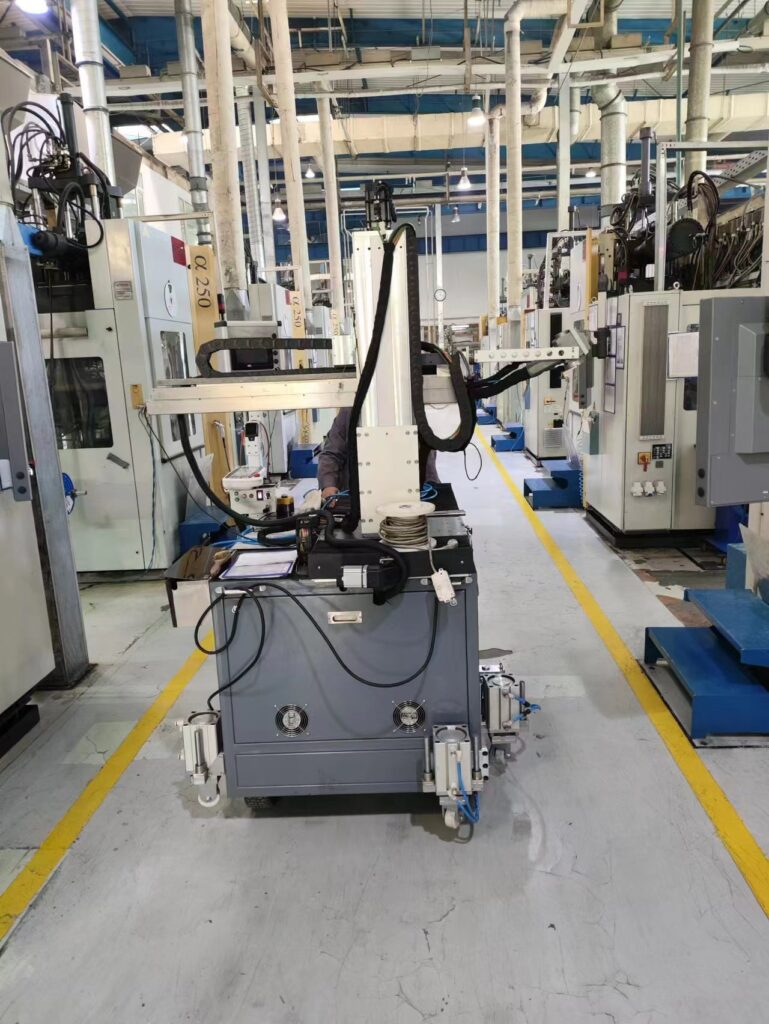
Die AGV Online Automatic Cleaning Machine represents the pinnacle of Industry 4.0 integration. Unlike stationary units or handheld devices, this system is mounted on an Automated Guided Vehicle (AGV) platform, allowing it to navigate factory floors autonomously and perform cleaning tasks on large stationary equipment or moving production lines.
This model, the CKJG-500w-05, utilizes a 500W pulsed fiber laser, which is ideal for removing stubborn rust without damaging the substrate. The integration of a red light aiming system ensures pinpoint accuracy, while the substantial processing range makes it suitable for large-scale operations such as hull cleaning, large pipe maintenance, or rail track refurbishment.
Technische Daten
| Maschinenmodell | CKJG-500w-05 |
|---|---|
| Laser-Wellenlänge | 1064nm |
| Maximum Laser Power | 3KW (Peak) / 500W (Avg) |
| Operating Mode | Continuous / Pulsed Options |
| Fiber Optic Cable Length | 10 meters |
| Output Fiber Connector | QCS Header Standard |
| Repeatability | ±0.05mm |
| Pulse Frequency | 50Hz continuously adjustable |
| Processing Range | 600mm × 2000mm |
| Aiming and Positioning | Red light indicator |
| Leistungsanforderungen | 220V / 50Hz / 60Hz / 60A |
| Optical System | Using ring mirror with constant temperature control |
| Methode der Kühlung | Water cooling, air cooling |
| Laser Main Unit Dimensions | 500mm x 420mm x 120mm |
The inclusion of a 10-meter fiber cable allows the laser head to reach difficult areas while the main unit remains secure on the AGV. The water cooling system ensures 24/7 operation capabilities, making it a top choice for high-volume manufacturing environments.
2.2 6 Axis Automatic Mold Laser Cleaning Machine
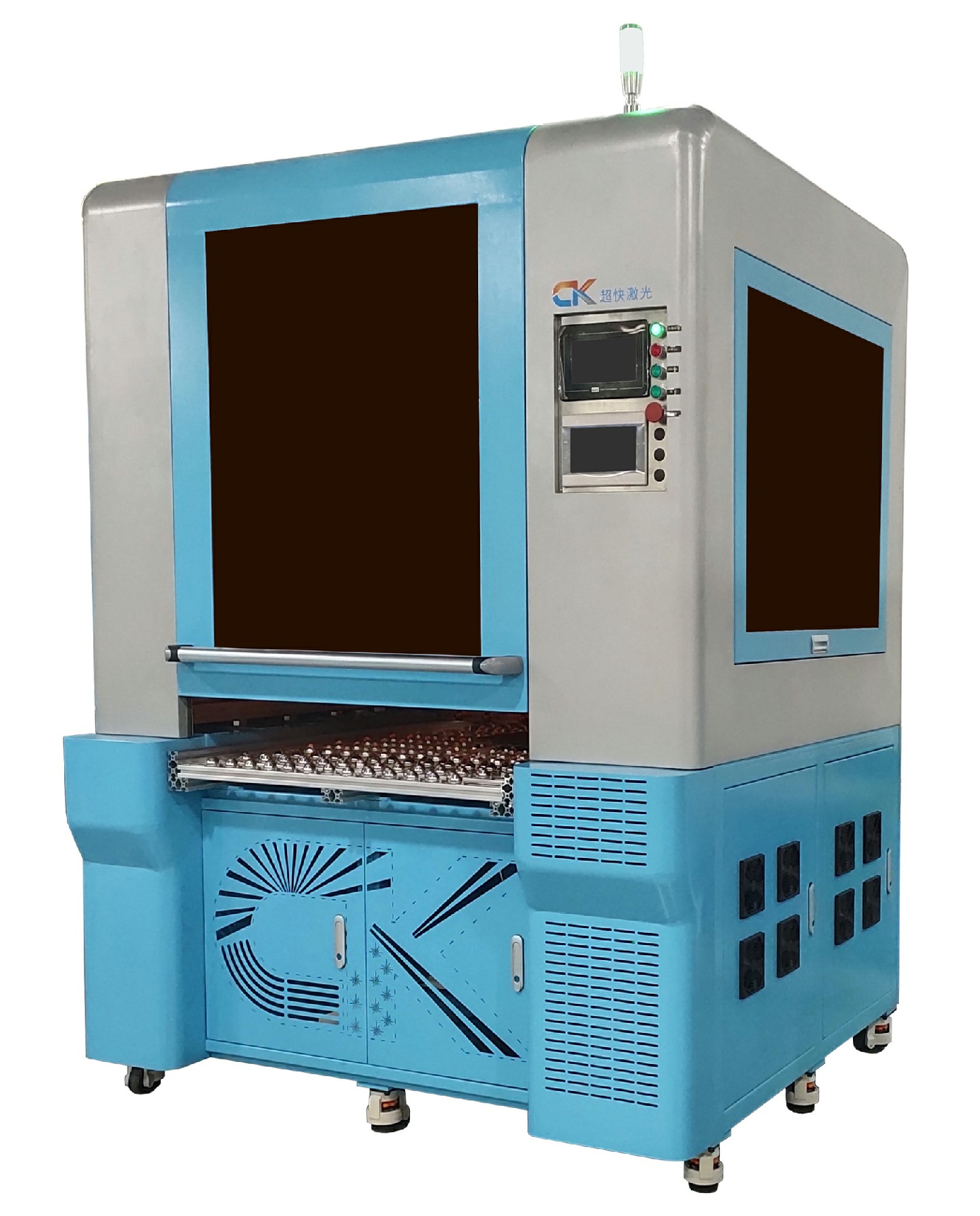
For complex geometries, such as tire molds, injection molds, or intricate engine parts, a simple 2D cleaning head is insufficient. The 6-achsige automatische Laser-Reinigungsmaschine für Formen solves this by integrating a high-precision laser cleaning head onto a 6-axis robotic arm. This setup allows the laser to approach the workpiece from any angle, cleaning deep crevices and undercuts that manual operators might miss.
This machine is specifically engineered for the mold industry where maintaining the dimensional tolerance of the mold is critical. Traditional abrasive cleaning can slowly wear down mold edges, resulting in flash on the final product. This laser system cleans without physical contact, preserving the mold’s lifespan.
Technische Daten
| Reinigungskraft | 120W (High Precision Source) |
|---|---|
| Total Power Consumption | 5KW |
| Leistung Spannung | AC 110/220V |
| Methode der Kühlung | Luftkühlung |
| Laser-Klasse | Stufe 4 |
| Impuls Energie | 1.5mJ |
| Laser-Wellenlänge | 1064nm |
| Vorwärmzeit | 10 seconds |
| Arbeitsbedingungen | Flacher Platz ohne Vibration und Stoß |
| Arbeitstemperatur | 0-40 ℃ |
| Lagertemperatur | -10~+60℃ |
| Maschinengröße (Standard) | B160 x L160 x H220 cm |
| Machine Size (Plus Model) | W200 x L200 x H245 cm |
| Gewicht | 900kg |
With a pulse energy of 1.5mJ and a 120W source, this machine delivers a “gentle” yet effective clean, perfect for sensitive surfaces where high-power ablation might be risky. The fully enclosed design (implied by the dimensions and weight) ensures operator safety by containing reflected laser radiation.
2.3 High-Precision 100W Backpack Pulsed Laser
While the first two entries focus on automation, portability is often required for field work—such as cleaning rust from bridges, monuments, or outdoor infrastructure. The 100W Backpack Pulsed Laser is a favorite among mobile contractors. Unlike continuous wave (CW) lasers, pulsed lasers deliver high peak energy in short bursts, which is excellent for removing coatings without heating the base metal.
Wesentliche Merkmale:
- Portability: Weighs less than 15kg and is worn like a backpack.
- Battery Operation: Many models come with lithium-ion battery packs for up to 2 hours of cordless cleaning.
- Anwendung: Ideal for graffiti removal, heritage restoration, and spot rust removal on elevated structures.
2.4 1500W CW Handheld Fiber Laser Cleaner
If speed is your priority and the substrate is thick steel (like ship hulls or heavy machinery), the 1500W Continuous Wave (CW) Fiber Laser is the industry standard. These machines use a constant beam of light to “burn” through thick rust and paint layers rapidly. While less precise than pulsed lasers, their coverage rate is significantly higher.
This type of machine is often the Best laser cleaning machine for rust removal for shipyards and heavy equipment repair shops. The handheld gun is ergonomic, and the fiber laser source (often from brands like Raycus or MAX) provides a lifespan of up to 100,000 hours.
2.5 Enclosed Rotary Laser Cleaning Station
For small automotive parts like gears, brake discs, and shafts, an enclosed rotary station is the safest and most efficient option. These machines function similarly to a CNC lathe; the part is clamped and rotated while the laser head traverses the length of the component.
The enclosure ensures that all dust and fumes are captured by an integrated extraction system, maintaining a clean workshop environment. These systems typically use a 200W or 300W pulsed laser source to ensure the critical dimensions of the automotive parts are not altered during the de-rusting process.
2.6 3000W High-Power Industrial Cart System
At the top of the power chart sits the 3000W Industrial Cart System. This beast is designed for the most extreme corrosion environments, such as offshore oil rigs and mining equipment. Capable of removing millimeters of rust scale in seconds, it requires a robust water chiller and a 3-phase power connection.
Due to the immense power, safety protocols are strict. These machines often come with dual-safety switches and interlocks to prevent accidental discharge. They are the heavy artillery in the war against corrosion, capable of replacing multiple sandblasting teams with a single operator.
3. Buying Guide: Pulsed vs. Continuous Wave
Choosing the right machine depends largely on understanding the difference between the two main laser types.
Pulsed Lasers (Gaussian Beam)
Pulsed lasers, like the 6-achsige automatische Laser-Reinigungsmaschine für Formen and the AGV unit mentioned above, emit light in short, high-energy bursts. This allows the contaminant to be vaporized before heat can conduct into the base material.
- Geeignet für: Molds, thin metals, heritage restoration, high-precision cleaning.
- Vorteile: No thermal damage, high control.
- Nachteile: Slower cleaning speed, higher cost per watt.
Kontinuierliche Wellenlaser (CW-Laser)
CW lasers emit a steady stream of laser energy. They act more like a “light scraper,” using heat to burn away rust.
- Geeignet für: Heavy steel, bridges, ship hulls, removing thick paint.
- Vorteile: Very fast, lower cost.
- Nachteile: Generates significant heat; can warp thin metals.
4. Safety and Maintenance Protocols
Operating a Class 4 laser requires strict adherence to safety standards. The invisible nature of the fiber laser beam (1064nm) makes it particularly dangerous to the retina.
Warning: Always wear certified OD6+ or OD7+ laser safety goggles matched to the 1064nm wavelength. Never point the laser nozzle at skin or flammable materials.
Maintenance Tips
- Protective Lens: The protective lens on the laser gun is a consumable. Check it daily for dust or burn spots. A dirty lens can cause the laser head to overheat and fail.
- Chiller Maintenance: For water-cooled units like the AGV model, ensure the water is distilled and changed monthly to prevent algae growth or mineral buildup.
- Rauchgasabsaugung: Vaporized rust and paint create hazardous smoke. Ensure your fume extractor filters are replaced regularly to protect operator health.
5. Summary and Comparison
To help you decide, here is a quick comparison of the top featured units.
| Maschinentyp | Strom | Beste Anwendung | Mobilität |
|---|---|---|---|
| AGV Automatic Cleaner | 500W Pulsed | Large scale automated factories, long pipelines | Autonomous (AGV) |
| 6-Axis Mold Cleaner | 120 W gepulst | Complex molds, engine parts, 3D shapes | Stationary (Robotic) |
| Backpack Portable | 100W gepulst | Outdoor spot cleaning, heights | High (Wearable) |
| CW-Handgerät | 1500W CW | Thick steel, rapid rust removal | Medium (Wheeled) |
6. Frequently Asked Questions (FAQs)
Does laser cleaning damage the metal?
If the correct settings are used, no. Pulsed lasers are specifically designed to leave the substrate intact. CW lasers can cause minor heating, but on thick steel, this is negligible. Always test on a scrap piece first.
How fast can these machines clean?
Speed depends on the laser power and rust thickness. A 1500W machine can clean typical surface rust at a rate of 15 to 20 square meters per hour. The 500W AGV model is optimized for consistency rather than raw speed.
What is the consumable cost?
Very low. The only consumables are electricity and the protective lens (which costs roughly $5-$10 and lasts weeks). Compared to sandblasting media or chemical disposal, the operating cost is minimal.
Can the 6-Axis machine be programmed for different parts?
Yes. The 6-axis robotic arm is fully programmable. You can save multiple “recipes” or trajectories for different mold types, allowing for quick changeovers in a production line.