- Ziva@CKlasersz.com
- WeChat:86-13138536413
- 400-168-9906
- 0755 27084852





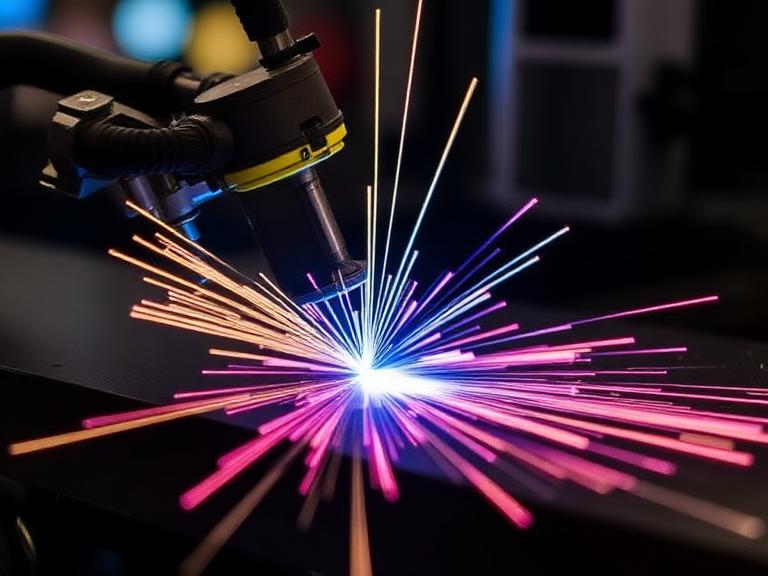
If you’re wondering how do lasers clean metal and why laser cleaning technology is rapidly replacing sandblasting, chemical cleaning, and manual grinding across global industries, this comprehensive guide explains everything you need to know. Laser cleaning has become one of the most efficient, environmentally friendly, and precise surface treatment technologies available today.
In this article, you will learn the science behind how lasers clean metal, the different types of machines, advantages, applications, and why leading manufacturers such as Super Fast Laser Technology Co.. are shaping the future of industrial cleaning.
Inhaltsübersicht
- 1. Introduction to Laser Cleaning
- 2. How Do Lasers Clean Metal? The Science Explained
- 3. Laser–Material Interaction: Ablation, Thermal Effects & Precision
- 4. Types of Laser Cleaning Machines
- 5. Industrial Applications of Laser Metal Cleaning
- 6. Benefits of Using Lasers to Clean Metal
- 7. Laser Cleaning vs Traditional Cleaning Methods
- 8. Summary Table: How Lasers Clean Metal
- 9. Company Spotlight: Super Fast Laser Technology Co., Ltd.
- 10. Frequently Asked Questions11. References
1. Introduction to Laser Cleaning
Laser cleaning is a cutting-edge surface treatment method that uses high-energy laser beams to remove contaminants, rust, paint, oxidation, and residues from metal surfaces. It has become popular because lasers clean metal without damaging the base material, making it suitable for aerospace, automotive manufacturing, mold maintenance, electronics, power generation, and more.
The process relies on extremely precise energy delivery. When the laser beam hits the unwanted layer, it absorbs the energy and instantly vaporizes or detaches from the surface. Because metal reflects a portion of the laser wavelength, the underlying substrate remains safe.
2. How Do Lasers Clean Metal? The Science Explained
Understanding how lasers clean metal requires looking at how different materials absorb laser energy. Laser cleaning machines emit focused pulses of light with extremely high energy density. When these pulses strike contaminants such as rust, paint, oil, or oxides, the unwanted layer heats rapidly, expands, and is ejected from the metal surface.
2.1 Laser Ablation – The Core Mechanism
Laser ablation is the primary physical principle behind how lasers clean metal. Ablation occurs when a material absorbs enough laser energy to undergo:
- Rapid heating
- Instant vaporization
- Micro-explosive removal
Because the laser energy is absorbed mainly by the contamination layer—not the metal—the cleaning process is highly selective and safe.
2.2 Selective Absorption of Laser Energy
Rust, paint, oxide, and oil absorb laser wavelengths more efficiently than polished or bare metal. That’s why lasers clean metal while leaving the base material intact.
2.3 Plasma Generation
When the surface vaporizes, it can create a micro plasma cloud that further contributes to the breakdown of surface contaminants. This phenomenon enhances cleaning power without needing abrasive media.
3. Laser–Material Interaction: Ablation, Thermal Effects & Precision
When lasers clean metal, several physical processes occur simultaneously, depending on wavelength, intensity, and material type.
3.1 Photothermal Effects
The contaminant layer heats rapidly and detaches. Because metals dissipate heat quickly, the substrate is protected.
3.2 Photomechanical Effects
Shockwaves created by rapid expansion lift the unwanted layer away from the metal surface.
3.3 Photochemical Effects
Chemical bonds in contaminants break down under laser light, aiding removal.
Together, these processes ensure lasers clean metal cleanly, precisely, and safely.
4. Types of Laser Cleaning Machines
Laser cleaning equipment varies by power output, mobility, automation, and intended use. Below are the main categories based on industry standards and the types produced by Super Fast Laser Technology Co.Ltd.
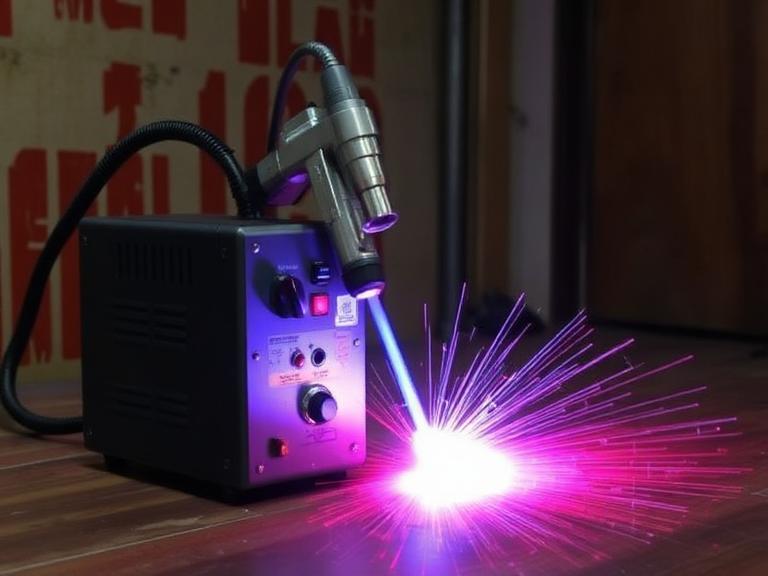
4.1 Handheld Laser Cleaning Machines
Portable, flexible, and suitable for general industrial cleaning tasks. Ideal for rust removal, paint stripping, and weld preparation.
4.2 Automatic Transmission Brake Pads Laser Cleaning Systems
These systems are engineered for automotive production lines. They ensure consistent cleaning on brake pads and transmission components where precision is critical.
4.3 6-Axis Automatic Mold Laser Cleaning Machines
Designed for mold manufacturing and maintenance. Multi-axis robots ensure uniform, high-precision cleaning without damaging mold geometry.
4.4 Fully Customized Automation Solutions
Built according to production requirements. These systems integrate conveyor lines, robotic arms, software control, and advanced laser modules.
5. Industrial Applications of Laser Metal Cleaning
5.1 Automotive Industry
Laser cleaning removes welding residues, prepares metal surfaces, and cleans brake and engine components. The precision ensures high-quality bonding, soldering, and adhesive application.
5.2 Aerospace & Aviation
Aircraft components require damage-free cleaning. Lasers clean metal without abrasion or micro-cracking, making it ideal for titanium and aluminum alloys.
5.3 Mold and Die Manufacturing
Mold cleaning is traditionally labor-intensive. Laser cleaning offers:
- No mold wear
- No chemical use
- High repeatability
5.4 Shipbuilding & Marine
Rust removal is one of the most common applications. Laser cleaning prepares surfaces for coatings and welding.
5.5 Electronics Manufacturing
Lasers remove oxides and micro-contaminants from precision components without contact.
6. Benefits of Using Lasers to Clean Metal
There are many advantages to using lasers clean metal compared to traditional methods:
- No consumables: No sand, chemicals, or blasting media.
- Non-contact, non-abrasive: Does not wear or scratch metal.
- High precision: Cleans even delicate components.
- Eco-friendly: No chemical waste.
- Consistent cleaning quality: Automation ensures repeatability.
- Reduced labor: Faster, more efficient workflows.
These advantages explain why lasers clean metal in almost every modern industry today.
7. Laser Cleaning vs Traditional Cleaning Methods
| Method | Pros | Cons |
|---|---|---|
| Laser-Reinigung | Precise, eco-friendly, non-abrasive, low maintenance | Higher initial investment |
| Sandstrahlen | Fast removal | Abrasive, messy, requires consumables |
| Chemische Reinigung | Effective for certain contaminants | Toxic waste, environmental concerns |
| Manual Grinding | Simple equipment | Surface damage, slow, inconsistent |
8. Summary Table: How Lasers Clean Metal
| Prozess | Beschreibung |
|---|---|
| Laserablation | Vaporizes contamination layers from metal |
| Thermische Ausdehnung | Heat causes contaminants to detach |
| Shockwave Removal | Microscopic shockwaves lift particles |
| Selective Absorption | Contaminants absorb more energy than metal |
9. Company Spotlight: Super Fast Laser Technology Co., Ltd.
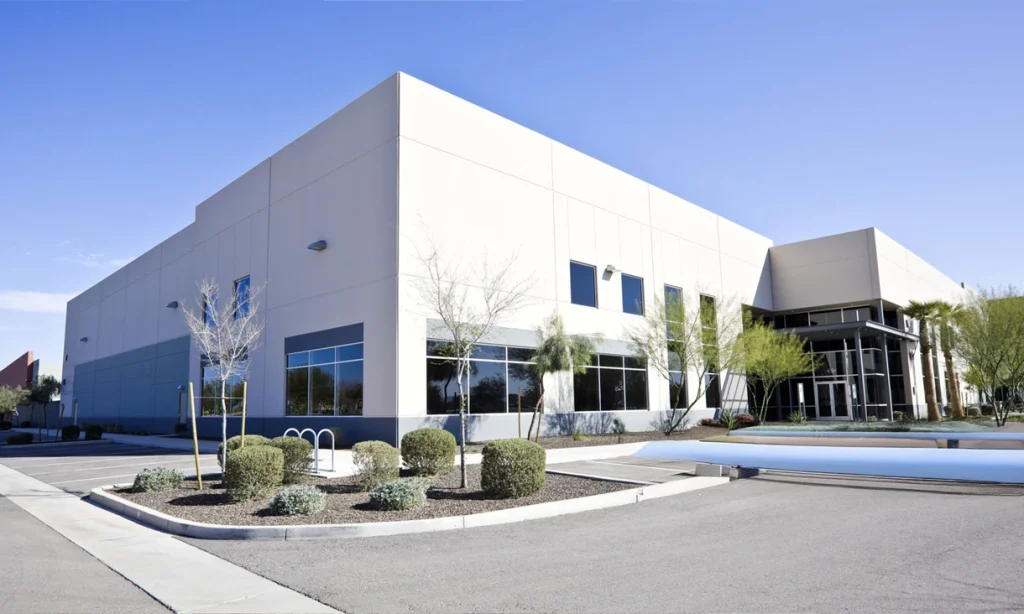
Super Fast Laser Technology Co.Ltd., based in Shenzhen, is the first domestic enterprise specializing exclusively in the R&D, production, and sales of laser cleaning machines in China.
With its own independent R&D team and dedicated production facility, the company leads the industry in innovation, performance, and reliability. Super Fast Laser focuses on high-technology laser applications and is committed to offering specialized, professional laser cleaning equipment, automation systems, software, and fully customized cleaning solutions.
Flagship Products
- Handgeführte Laser-Reinigungsmaschine
- Automatikgetriebe Bremsbeläge Laser-Reinigungsgeräte
- 6-achsige automatische Laser-Reinigungsmaschine für Formen
- Automated Customized Laser Cleaning Solutions
These products demonstrate how advanced engineering and research-driven design enhance the efficiency and precision of how lasers clean metal across diverse industries.
10. Frequently Asked Questions
1. Do lasers damage metal when cleaning?
No. Laser parameters are tuned so contaminants absorb the energy while the metal reflects it.
2. Can lasers clean rust completely?
Yes. Laser cleaning removes rust at multiple depths depending on pulse energy and duration.
3. Is laser cleaning environmentally friendly?
Yes. It produces no chemical waste and requires no consumables.
4. What metals can be cleaned with lasers?
Steel, stainless steel, aluminum, copper, titanium, molds, cast iron, and more.
5. Are handheld machines powerful enough for industrial work?
Modern handheld machines are extremely capable and used widely in manufacturing and maintenance.